A bookkeeping client of ours in Melbourne once tracked where her week actually went. Eleven hours — eleven — spent retyping invoice details from PDFs into Xero. She wasn't slow. The work was just endless, and it never made her firm a single extra dollar.
That's the story in most Australian businesses right now. Good people stuck on copy-paste work. Data moved between spreadsheets by hand. Customer details typed into the CRM twice because two systems don't talk to each other.
AI workflow automation exists to kill exactly this kind of work. Not the interesting parts of anyone's job — the grind. And in 2026 the technology is finally reliable enough that we'd put it in front of a client without holding our breath.
Everything below comes from systems we've actually shipped at Mintodes. Real deployments, real Australian businesses. No theory.
Let's define the thing before selling it
Workflow automation by itself isn't new — people have been wiring process steps together for years so the work moves along without anyone pushing it. Form comes in, CRM record gets created, welcome email goes out, sales rep gets a task. Fine. Zapier's been doing a version of that for a decade.
The problem was always the messy stuff. Old-style automation needs tidy, predictable input — a form field, a spreadsheet row. Hand it a scanned invoice, or a rambling customer email, and it falls over. A human steps in. The "automation" quietly becomes a half-automation.
That's the gap AI closes. Modern language models can read an unstructured email, work out what the customer actually wants, pull out the details, and route it — roughly the way a trained staff member would. Which means the processes everyone wrote off as "too messy to automate" are now, honestly, the best candidates.
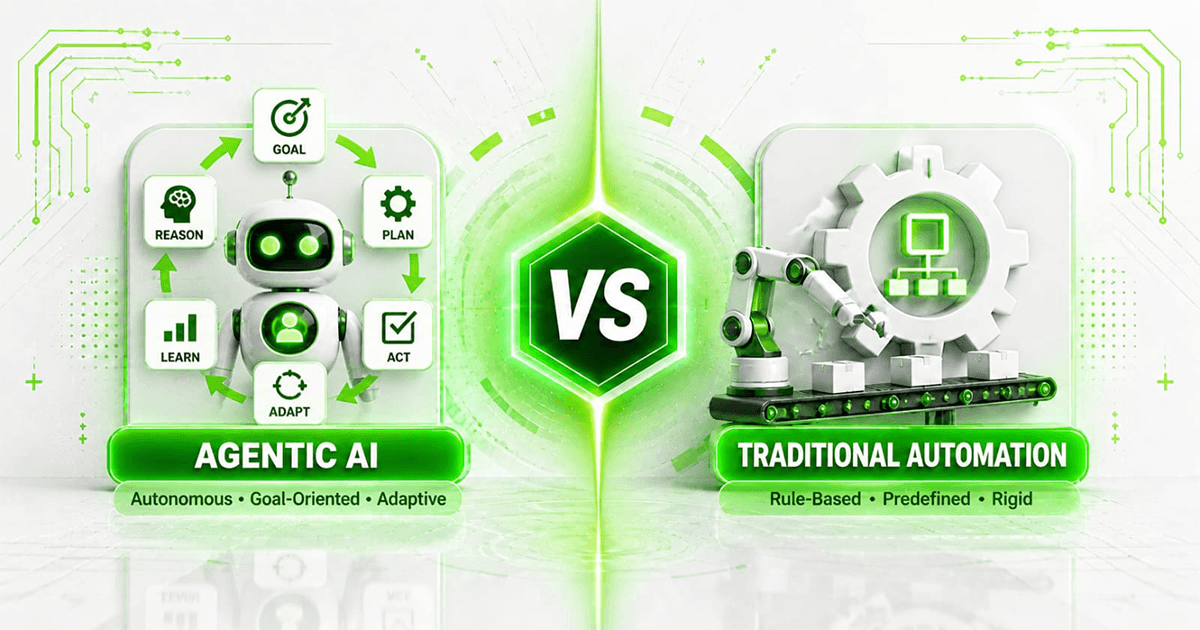
We went deep on this distinction in Agentic AI vs Traditional Automation. Short version: rule-based bots handle the happy path. Agents handle everything else.
Why now, and why especially in Australia
Labour here is expensive
Australian wages are among the highest anywhere. If your consultants bill at $250 an hour and they're spending five of those hours a week on admin, you've already earned that money and then handed it back. Automate ten admin hours a week per person and the profitability of the whole firm shifts. That's not a rounding error.
The tech stopped being embarrassing
Five years ago "AI automation" mostly meant chatbots that annoyed your customers and RPA scripts that broke every time someone renamed a column. Today's production agents hold context, process documents properly, and make judgement calls inside guardrails you set. We've written up what agentic AI looks like in practice for Australian businesses — none of it is experimental anymore.
Your competitors aren't waiting
Margins in the Australian SME market are thin and getting thinner. The firm that quotes in an hour beats the firm that quotes in three days. At this point business process automation is less a competitive edge and more table stakes.
The six processes worth automating first
Not everything deserves automation. The sweet spot: work that's repetitive, has a clear "right way" to be done, and eats real staff hours. These six come up again and again with Australian clients.
1. Document processing and data entry
Invoices, purchase orders, contracts, application forms — they arrive as PDFs and email attachments, and someone gets paid to retype them. Document processing automation extracts the data, checks it against your rules, and pushes it into your accounting or CRM system. Hours per day become seconds per document. This is where our Melbourne bookkeeper got her eleven hours back.
2. Finance and accounts admin
AP and AR are goldmines. An agent can grab invoices out of the inbox, match them to purchase orders, code them to the right accounts and queue them in Xero or MYOB for one-click approval. Reconciliation, payment chasing, month-end reports — same pattern. Our finance and accounting automation projects consistently show the fastest payback of anything we build, simply because finance admin is high-volume, structured, and expensive to do by hand.
3. CRM updates and sales follow-up
Here's a cycle every sales manager knows: reps hate updating the CRM, so the CRM is always stale, so nobody trusts the pipeline numbers. Automation breaks it. Interactions get logged automatically, records stay current, leads get scored, follow-ups fire on schedule. Our CRM and sales automation work keeps HubSpot and Salesforce accurate without asking salespeople to do more admin — which, let's be honest, was never going to happen anyway.
4. Customer support triage
Most support queues are the same fifteen questions wearing different hats. An AI chatbot trained on your own docs answers the routine majority instantly — including at 11pm on a Sunday — and hands the genuinely tricky ones to a human with full context attached. Your team stops starting from zero on every ticket.
5. Onboarding and internal requests
Leave requests. IT access. "Where's the policy on X?" HR and ops teams drown in these, and they all follow fixed workflows, which makes them ideal targets. New starters get provisioned automatically; policy questions get answered by an agent that has actually read every policy document. Unlike most of us.
6. Reporting
If someone spends Monday morning stitching together the same report from the same three systems, that report should build itself. Full stop.
Automate or hire? The honest maths
Sooner or later every owner asks it: should I just hire someone instead?
Run the numbers. A full-time admin hire in Australia lands around $65,000–$85,000 a year once super, leave and overheads are in. That person works about 38 hours a week, needs training, takes holidays, and will eventually resign. A well-built automation typically costs a fraction of one year's salary, runs around the clock, doesn't fat-finger numbers at 4pm on a Friday, and handles ten times the volume without a pay rise.
To be clear — this isn't an argument for cutting staff. In every deployment we've done, the same thing happens: people stop doing the grinding admin and start doing work that needs actual judgement. Talking to customers. Closing deals. Fixing the service. Automation removes the tasks nobody wanted in the first place.
What implementation really looks like
Businesses hesitate because they picture a massive, risky IT project. Done properly, it isn't one. Here's how we run it:
Week 1 — process audit. We map your repetitive processes, measure the hours each one burns, and rank them. You come out of this knowing exactly where your team's time goes. Most owners find this stage uncomfortable, in a useful way.
Weeks 2–4 — pilot build. One process, automated end to end. Not five. One. Starting narrow proves the ROI with real numbers before anyone commits to anything bigger.
Deploy and watch it. Live, with logging, error handling and human checkpoints where the stakes justify them. Monitoring isn't optional — we learned that the hard way and wrote it up in Running n8n in Production.
Then expand. Once the pilot pays for itself, you move to the next process on the list. Most clients end up with four to six automated workflows inside a year.
The pilot cycle usually wraps inside six weeks — the same ship-fast discipline we bring to every workflow automation engagement.
The mistakes that sink automation projects
We get called in to rescue a fair few failed projects. The post-mortem is nearly always one of these:
- Automating a broken process. You just get bad outcomes faster. Fix the process, then automate it — never the other way round.
- Buying tools instead of outcomes. We've watched companies subscribe to three automation platforms and automate nothing. The platform is maybe a fifth of the job; designing workflows that survive contact with your actual business is the rest.
- No error handling. Real-world data is filthy. Systems built for the happy path fail silently, and one silent failure does more damage to trust than a month of wins can repair.
- Treating privacy as someone else's problem. The Privacy Act 1988 and the APPs apply to you whether or not your vendor mentioned them. Where data flows, and which AI providers touch it, should be decided on purpose.
- Going too big, too fast. The pattern is boringly consistent: winners automate one process, prove it, expand. Failures try to transform the whole company in a quarter.
What does it cost in Australia?
The annoying-but-true answer is "it depends", so here are the rough shapes we see in 2026. A single workflow — invoice capture into Xero, that kind of thing — is an entry-level job, done in a few weeks. Multi-step agent workflows, where a customer intake runs through document processing and lands in the CRM without a human touching it, sit in the middle: one to two months. Full operational programs spanning departments are bigger, and we structure those in phases so each phase's savings fund the next one. Nobody should be writing a giant cheque up front for automation.
But the price tag isn't really the number to watch. Payback is. Most of our clients recover the build cost within three to six months just from reduced admin hours — and then the savings keep compounding for as long as the system runs. If you want the detail on how we scope and price, it's all in the pricing FAQ, and there are a couple of calculators in our free tools worth ten minutes of your time.
Questions we get asked a lot
What's the difference between workflow automation and AI workflow automation?
The old kind runs on fixed rules, so it only copes with clean, structured input. Bolt AI onto it and suddenly the system can read the messy stuff too — emails, PDFs, half-coherent customer messages — and make calls within guardrails you've set. In practice that's the difference between automating 30% of a process and automating nearly all of it.
Is this suitable for small Australian businesses?
Honestly? More suitable than for big ones. A 200-person company can absorb wasted admin hours. A six-person firm can't — every hour is felt. We've seen a single automated workflow, invoice processing for instance, hand a small team a few hundred hours a year back. That's real money at that size.
How long does implementation take?
A focused pilot takes somewhere between two and six weeks depending on how tangled your systems are. Bigger programs happen in phases over months, but you shouldn't be waiting till the end to see value — each phase should pay off on its own.
Will it replace my staff?
We've never seen it happen, and we've done a lot of these. What actually happens: the tasks people resented disappear, and the same people end up doing customer-facing, judgement-heavy work instead. Clients grow without hiring at the same rate. That's the pattern, every time.
Is my data safe?
Depends entirely on who built the system and how. Anything we ship is designed around the Privacy Act 1988 and the APPs from day one — where the data sits, which AI providers see it, what stays onshore. If a vendor treats this as an afterthought, walk away.
Start with one process
You don't need an AI strategy deck or a transformation committee. You need one repetitive process, automated properly, proving its value in the real world. Everything else follows.
If you'd like help working out which process in your business pays back fastest, talk to us. We'll map your workflows, show you the numbers, and tell you straight whether automation makes sense — because we only build systems that pay for themselves.
Written by the Mintodes engineering team. We build AI agents and automated workflows for Australian businesses — systems that run in production every day, not slide decks.