Let's get the awkward part out of the way: chatbots earned their terrible reputation. You've met the old kind. It pops up uninvited, offers four buttons, understands none of your typing, and eventually surrenders you to a contact form. Customers hate them. We'd go further — those bots actively cost businesses money, because an enquiry that hits a wall at 9pm is an enquiry that goes to a competitor by 9:15.
So when we talk about AI chatbot development for Australian businesses, we're not talking about that. The technology changed completely, and most business owners haven't caught up with how much.
The old bots followed scripts. The new ones read.
A script bot is a phone menu wearing a chat window. Press one for opening hours. It can only answer questions someone predicted in advance, worded roughly the way the builder expected.
A modern AI chatbot works differently — it's built on a language model connected to your content. Your product docs, your policies, your pricing pages, your past support answers. The technical name for this pattern is RAG (retrieval-augmented generation): the bot retrieves the relevant chunk of your actual documentation, then writes an answer from it. Ask it something weirdly worded, half in shorthand, with a typo in every second word — it still understands, because understanding messy human language is precisely what these models do.
The practical difference: a script bot resolves maybe two enquiries in ten and frustrates the rest. A properly built RAG chatbot resolves the routine majority outright and hands the rest to your team with context attached — who asked, what they wanted, what's already been said. Nobody starts from zero.
Where chatbots earn their keep for Australian businesses
Not every business needs one, and we'll happily tell you if yours doesn't. But some situations are almost unfair advantages:
- After-hours enquiries. Australia's a big place with three time zones, and your customers don't stop having questions at 5pm AEST. A trades or services business — the kind we work with a lot from our Brisbane client base — loses real jobs to whoever answers first. A chatbot answers first, every time.
- The same fifteen questions. Pull up your support inbox and be honest: most of it is repeats. Shipping, returns, pricing, availability, how-do-I. Every one of those answered instantly is a ticket your team never sees.
- Lead qualification. A bot that asks three sensible questions before booking a call means your sales team stops doing discovery on people who were never going to buy. Connect it to your CRM — we usually pair this with CRM and sales automation — and qualified leads land in the pipeline with their answers already logged.
- Internal knowledge. Chatbots aren't only customer-facing. An internal bot that's read every policy document, product spec and process guide saves your own staff from interrupting each other all day. Bigger teams feel this one most.
What separates a good build from a liability
Here's the part most chatbot vendors won't lead with: a badly built AI chatbot is worse than none, because it can confidently make things up. A bot inventing a refund policy you don't have isn't a hypothetical — it's a lawsuit-shaped risk. Getting this right is most of the actual engineering:
Grounding. The bot answers only from your approved content. If the answer isn't in there, it says so and offers a human — it doesn't improvise. This constraint sounds limiting; it's actually what makes the whole thing trustworthy.
Escalation designed in. Some conversations need a person: complaints, complex quotes, anything emotional. A good bot recognises those fast and hands over gracefully, transcript included. The worst thing a bot can do is trap an angry customer in a loop.
Privacy by architecture. Customer conversations are personal information under the Privacy Act 1988. Where transcripts are stored, which AI provider processes them, and whether data stays onshore are design decisions we make explicitly — Australian hosting on Sydney's AWS region when residency matters. If a vendor can't answer these questions crisply, that tells you something.
Measurement. Resolution rate, escalation rate, the questions the bot couldn't answer. That last list is gold — it tells you exactly what content to add next. A chatbot without analytics is a chatbot nobody's improving.
What it costs and how long it takes
Ballpark, for Australian businesses in 2026: a focused chatbot — your knowledge base, your website, escalation to email or your existing helpdesk — is an entry-level engagement, typically live inside three to four weeks. Add CRM integration, booking systems, or multi-channel deployment (web plus WhatsApp plus internal) and you're in mid-range territory, five to eight weeks. Everything is fixed scope and quoted in AUD before we start; ongoing costs are mostly model usage, which for a typical SME chatbot runs less than a mobile phone plan.
The honest comparison isn't chatbot versus nothing — it's chatbot versus the hours your team currently spends answering repeat questions, plus the after-hours enquiries currently going nowhere. For most businesses past a certain enquiry volume, the maths stops being close. Our pricing FAQ covers how we scope in more detail.
Mistakes we keep seeing
A short list, learned from cleaning up other people's builds:
- Launching with the entire website dumped in as knowledge, contradictions and all. Curate first — the bot is only as trustworthy as its worst source.
- No escalation path, or one buried three menus deep. Frustration compounds fast in chat.
- Pretending the bot is human. Customers figure it out, and they don't forgive it. Say it's a bot; nobody minds a bot that helps.
- Set-and-forget. The unanswerable-questions list should drive content updates monthly. The businesses getting real value treat the bot like a staff member who keeps learning.
Chatbot or something bigger?
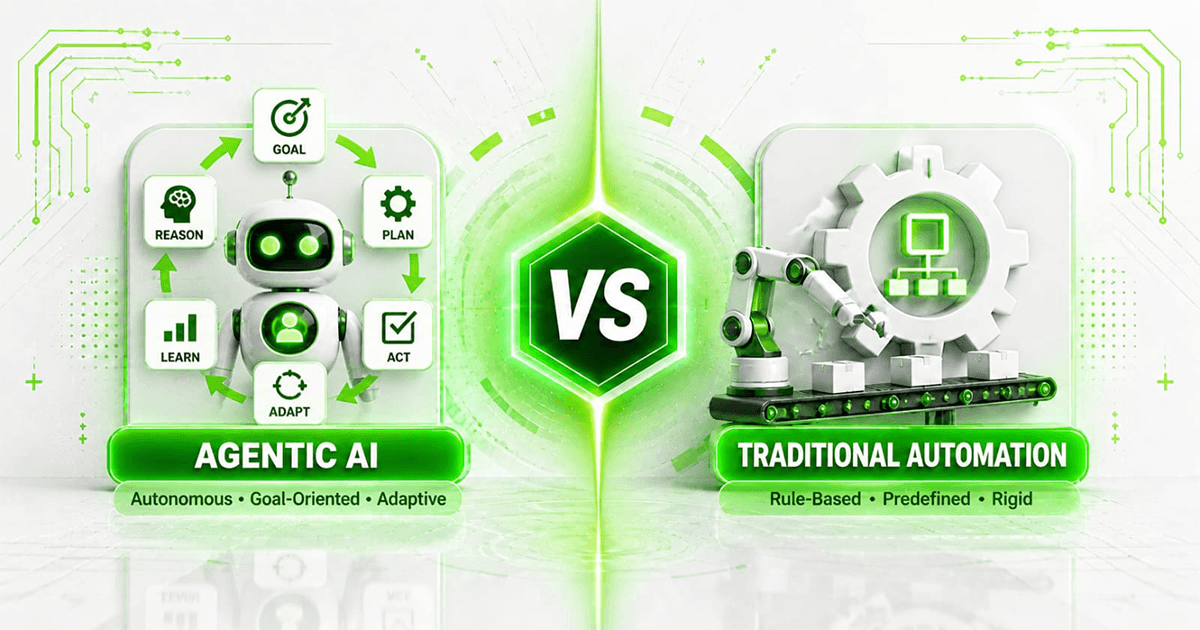
A chatbot is often the visible tip of a larger automation. The enquiry the bot handles can trigger a quote, create a CRM record, or kick off document collection — that's workflow automation territory, and it's where the deeper savings live. We've written about how these pieces fit together in our guide to agentic AI for Australian businesses. Some clients start with the chatbot and grow into the rest; others come at it the other way. Both work.
Common questions
Can a chatbot integrate with our existing systems?
Almost always yes — helpdesks, CRMs, booking platforms, and via API most bespoke systems too. Integration is usually where a chatbot goes from nice-to-have to genuinely load-bearing, because answers can then include live information: order status, availability, account details.
What about multiple languages?
Modern models handle this natively. For Australian businesses serving multilingual communities, the bot can respond in the customer's language while your knowledge base stays in English. No separate build required.
Will it work for a small business, or is this an enterprise thing?
The economics have flipped. This used to be enterprise-only; now a well-scoped chatbot is one of the cheapest automations a small business can buy, and small teams — where every interruption costs focus — often feel the benefit hardest.
How do we stop it saying something wrong?
Grounding, curation, and testing before launch — we run the bot against a battery of real past enquiries and edge cases. Plus the escalation rule: unsure means hand to a human, never guess. No system is perfect, but a grounded bot with honest fallbacks is dramatically safer than staff improvising answers from memory, which is the actual alternative.
The short version
Chatbots stopped being a gimmick roughly the moment language models learned to read your documentation. Built properly — grounded, escalating gracefully, measured, privacy-safe — an AI chatbot is the cheapest employee you'll never hire: answers instantly, works public holidays, never gets sick of the same question.
If you're weighing one up, talk to us. Bring your last month of enquiries; we'll tell you honestly what share a bot would have resolved, and what that build would cost in AUD. If the answer is "your volume doesn't justify it yet" — we'll say that too.
Written by the Mintodes engineering team. We build AI agents, chatbots and automated workflows for Australian businesses — systems that run in production, not demos.