A buyer enquires about a property at 8:47 pm.
Another wants to know whether pets are allowed.
A landlord emails asking about an inspection.
Three appraisal leads arrived during the afternoon.
Saturday's open-home notes still need to go into the CRM.
And somewhere inside the inbox is a seller who said they may list their property in three months.
None of this is particularly complicated.
That is exactly why it consumes so much time.
Real estate agents spend a surprising amount of the working week moving information between conversations, calendars, property systems, CRMs, documents and people.
AI can help with that work.
But the useful opportunity is not asking ChatGPT to write another property description filled with words such as stunning, luxurious and sought-after.
The more interesting use of AI for real estate agents is operational: helping an agency capture enquiries, organise information, prepare follow-ups and keep routine administration moving without removing the agent from decisions where relationships and judgement matter.
For Australian real estate businesses, that distinction is important.
Where Does AI Actually Fit Into Real Estate?
Real estate is unusually suited to selective automation because agents deal with both structured systems and messy human communication.
A CRM knows:
- contact name;
- phone number;
- email;
- property;
- lead stage; and
- assigned agent.
Customers do not communicate like database records.
They say:
"Hi, we came through the place on Saturday. We like it but we're wondering whether the owners would consider an earlier settlement. Also, could you send the contract to my partner?"
Somebody needs to understand what that message means before the systems around it can be updated.
That is where AI can help.
The AI interprets the unstructured information.
Normal software handles predictable actions.
The agent remains responsible for negotiations, advice, important communications and decisions.
That combination is generally more useful than trying to automate the entire role.
1. Responding to Property Enquiries Faster
Property enquiries arrive at inconvenient times.
Evenings, weekends and during open homes are exactly when prospective buyers or tenants may be browsing listings.
A person cannot respond immediately to everything.
AI can provide a first layer.
Suppose someone asks:
"Is 14 Smith Street still available? We're relocating from Melbourne and won't be in Sydney until next week. Are there any inspections after Tuesday?"
A system could identify:
Property: 14 Smith Street
Intent: inspection enquiry
Constraint: buyer unavailable until next Tuesday
Additional context: relocating interstate
It can then retrieve approved property information and prepare the appropriate next action.
If inspection times are available through an integrated system, the customer can be given real options.
If no suitable inspection exists, the enquiry can be routed to the responsible agent.
The important rule is simple:
AI should retrieve availability, not invent it.
That principle applies to prices, property information, contract details and anything else where accuracy matters.
2. Turning Enquiries Into Useful CRM Records
Capturing a lead is easy.
Capturing a useful lead is harder.
A CRM entry containing:
John — 04xx xxx xxx — interested in property
does not tell the next agent very much.
AI can turn conversations into structured information.
From emails, forms or approved conversation channels, a workflow might identify:
- buyer or seller intent;
- property of interest;
- preferred suburbs;
- approximate budget;
- desired property type;
- timing;
- finance status where voluntarily provided and appropriate;
- inspection preferences; and
- required follow-up.
The system can then create or update the CRM record.
That means an agent opening the contact later sees context instead of a blank lead.
For agencies dealing with large enquiry volumes, this can become part of broader CRM and sales automation.
3. Following Up After Open Homes
Saturday can generate plenty of activity.
Monday can generate plenty of administration.
Agents may need to review attendance, organise notes, identify interested buyers, record feedback, send follow-ups and decide who deserves a personal call.
AI can help organise that information.
Imagine 25 groups attend an inspection.
Afterwards, buyer feedback arrives through notes, forms, text and conversations.
Instead of treating every attendee identically, a workflow could help categorise the information:
High interest
Requested contract, asked detailed questions or indicated intention to make an offer.
Needs follow-up
Interested but has questions about the property, timing or another issue.
Early research
Attended but provided little indication of immediate intent.
These should not be treated as automatic judgements about who will buy.
They are simply ways of organising information so an agent can decide where to focus personal follow-up.
AI prepares the queue.
The agent handles the relationship.
4. Preparing Seller Appraisal Leads
A new appraisal request often starts a chain of administrative work.
The agency may need to:
- create the contact;
- confirm the property;
- assign an agent;
- collect information;
- arrange the appointment;
- prepare internal notes;
- schedule reminders; and
- create follow-up tasks.
Much of that can happen through workflow automation.
AI becomes useful where the enquiry contains free text.
For example:
"We're thinking about selling our investment property in Parramatta. Tenant's lease finishes in November and we'd probably sell after that. Just trying to understand what it's worth at this stage."
There is useful information buried inside that paragraph.
Location: Parramatta
Property: investment property
Current status: tenanted
Lease timing: finishes November
Potential selling timeframe: after November
Immediate intent: valuation/appraisal research
An AI-assisted workflow can structure those details before the agent even opens the lead.
The agent starts the conversation informed.
5. Drafting Property Listing Content
This is one of the most obvious uses of AI in real estate.
It is also one of the easiest to do badly.
Give an AI model five property features and it can produce 500 words of polished-sounding copy.
That does not mean the copy is accurate.
A safer workflow begins with approved property facts.
For example:
- three bedrooms;
- two bathrooms;
- single garage;
- renovated kitchen;
- 450 m² block;
- 600 metres from a particular station, if verified;
- north-facing backyard, if verified.
AI can turn those facts into a first draft.
A person then checks the content before publication.
The system should not be encouraged to fill gaps with plausible-sounding details.
If the source data does not say the kitchen has stone benchtops, the listing should not suddenly acquire stone benchtops because they sound good.
AI should improve presentation.
It should not manufacture property features.
6. Creating First Drafts of Routine Communication
Agents write similar messages repeatedly.
- inspection confirmations;
- follow-ups;
- appraisal confirmations;
- buyer check-ins;
- document requests;
- owner updates;
- appointment reminders; and
- routine internal notes.
AI can prepare these from approved information.
The benefit is not that an agent is incapable of writing an email.
The benefit is avoiding the repeated context switching required to write dozens of small messages throughout the day.
High-stakes communication deserves more care.
Negotiation, complaints, sensitive tenancy matters, legal issues and significant promises should not be casually delegated to generated text.
The closer the message is to a consequential decision, the stronger the case for human review.
7. Summarising Calls and Conversations
A ten-minute phone conversation may contain five useful pieces of information.
The agent remembers them while the call is happening.
Two hours and six conversations later, details become easier to lose.
Where appropriate and lawfully implemented, AI can help turn conversation records or agent notes into structured summaries.
For example:
Buyer: Sarah Williams
Property: 22 Example Road
Interest: strong
Concern: second bedroom size
Finance: customer stated pre-approval obtained
Requested: contract sent to solicitor
Next action: call after Saturday's second inspection
The summary can then be reviewed before being added to the CRM.
This is much more useful than a vague note saying:
"Spoke to buyer — interested."
8. Matching Buyers With Relevant Properties
Agencies accumulate buyer requirements over time.
One buyer wants:
- three bedrooms;
- north-west Sydney;
- under a particular budget;
- good public transport access; and
- a home office.
Another cares primarily about school catchments and land size.
Structured filters can already handle many of these requirements.
AI becomes useful when preferences are buried inside conversations and notes rather than clean database fields.
A system could help convert those conversations into searchable preferences and identify potentially relevant listings.
That should be treated as an assistance tool.
A human still needs to recognise nuance.
A buyer who said "around A$1.4 million" may not mean exactly the same thing as a database filter capped rigidly at A$1.4 million.
9. Managing Rental Enquiries
Property management creates a different set of repetitive communications.
Prospective tenants may ask about:
- inspection times;
- application processes;
- availability;
- property features;
- parking;
- lease terms; or
- how to submit documents.
Existing tenants may contact the agency about maintenance, access, documents or other issues.
AI can help identify what type of enquiry has arrived and route it into the correct process.
For example:
"There's water coming through the ceiling in the bedroom."
should not be treated like:
"Could you send me another copy of my rental ledger?"
They belong in completely different workflows.
AI can help classify the message.
The agency's approved rules determine what happens next.
10. Maintenance Request Triage
Maintenance inboxes are a good example of why AI and automation are different.
A fixed automation can detect that a maintenance form has been submitted.
AI can help interpret what the tenant actually wrote.
The system could extract:
- property;
- reported issue;
- affected area;
- information supplied;
- attachments;
- stated urgency; and
- missing details.
Then predefined agency rules determine the next step.
Routine cases can enter the normal maintenance workflow.
Potentially urgent or safety-related reports can be escalated according to approved procedures.
AI should not independently diagnose building, electrical, gas or other safety issues.
Its role is to help information reach the right process quickly.
11. Preparing Vendor Updates
Vendor reporting often involves gathering information from multiple places.
An agent may need to review:
- enquiry numbers;
- inspection attendance;
- buyer feedback;
- follow-up activity;
- campaign data; and
- relevant notes.
Software should calculate and retrieve the factual numbers.
AI can help turn those approved inputs into a readable first draft.
For example, rather than an agent manually assembling information from several systems, a workflow could produce:
Inspection attendance: 18 groups
Follow-up completed: 14
Contract requests: 4
Common feedback: second bedroom size and parking
Active follow-up: 3 groups
The AI can help explain the data.
It should not invent market sentiment or claim that a buyer is likely to make an offer unless there is actual information supporting that statement.
12. Finding Old Opportunities That Were Never Really Dead
Real estate databases contain plenty of forgotten contacts.
A homeowner asked for an appraisal nine months ago.
A buyer paused their search.
An investor said they might sell after a lease expired.
A landlord mentioned purchasing another property later in the year.
These are easy to forget because the immediate transaction did not happen.
A workflow can identify contacts whose follow-up date or circumstances make them relevant again.
AI can help interpret old notes to provide context.
Instead of an agent receiving:
Call Sarah
they might receive:
Sarah requested an appraisal last November. Notes indicate she planned to reconsider selling after the tenant's lease ended in September. Review before contacting.
That makes the follow-up considerably more useful.
AI Agents for Real Estate: Going Beyond Individual AI Tools
Many real estate AI tools perform one task.
Generate a listing.
Summarise an email.
Write a social post.
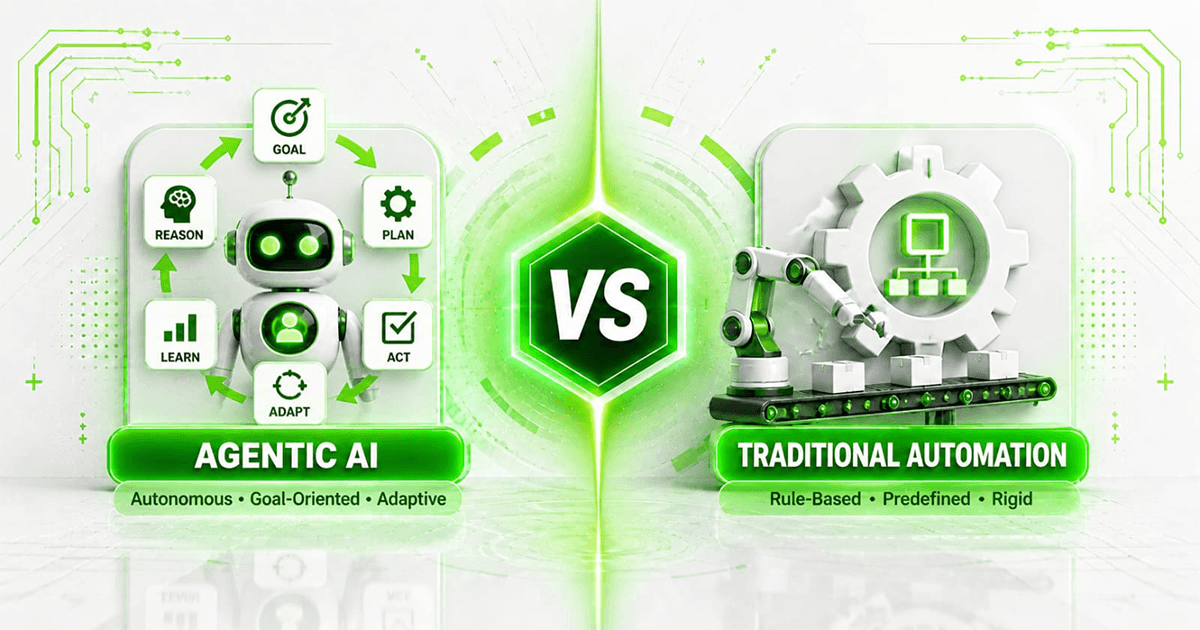
An AI agent can potentially coordinate several steps around a defined objective.
Suppose a new buyer enquiry arrives.
An agent could:
- read the enquiry;
- identify the property;
- check the CRM;
- create or update the contact;
- retrieve approved property information;
- determine what the buyer is asking;
- prepare an answer;
- record the interaction; and
- create the next follow-up.
That is different from simply asking a generative AI tool to write an email.
The system is participating in the workflow.
Our broader guide to AI agents in Australia explains how these systems combine AI interpretation with controlled tools and conventional automation.
Where Real Estate AI Goes Wrong
The biggest risk is often not dramatic.
It is confident, ordinary-looking inaccuracy.
Imagine an AI-generated listing stating that a property is within a five-minute walk of a station without that information being verified.
Or an automated response telling a buyer an inspection is available when the calendar says otherwise.
Or a CRM summary recording a buyer's budget incorrectly.
Each error looks small.
Together, they undermine the system.
Real estate AI should therefore distinguish between:
Information it knows from an approved source
and
Information it is generating.
Facts such as addresses, property features, inspection times, pricing information and customer records should come from trusted systems.
AI can interpret and communicate those facts.
It should not be the source of truth for them.
Human Review Should Depend on Consequence
Not every AI output needs the same level of review.
An internal summary carries one level of risk.
Publishing property information carries another.
Sending a sensitive message to a landlord or tenant carries another again.
A practical framework is:
Low consequence
AI can often act within defined rules.
Examples might include categorising an enquiry or creating an internal follow-up task.
Medium consequence
AI prepares; a person reviews.
Examples could include customer emails or listing drafts.
High consequence
A qualified person remains responsible.
Negotiations, contractual matters, legal interpretations, significant financial decisions and sensitive disputes should not be handed to an AI system simply because it can generate an answer.
The appropriate boundary depends on the agency, workflow and applicable obligations.
Privacy Matters More When AI Is Connected to the CRM
A standalone writing tool may receive a paragraph of property copy.
An integrated AI system can potentially see much more.
Depending on its permissions, it might access:
- customer names;
- addresses;
- phone numbers;
- email addresses;
- enquiry histories;
- property records;
- tenancy information;
- notes;
- documents; and
- other personal information.
That changes the privacy discussion.
Australian businesses using AI with personal information should consider applicable privacy obligations and current guidance from the Office of the Australian Information Commissioner.
Before connecting AI to a CRM or property-management system, ask:
- What information does the AI actually require?
- Which records can it access?
- Which provider processes that information?
- Where is data stored?
- How long is it retained?
- Can it be used to train provider models?
- Who can see the outputs?
- What actions are logged?
- What can the AI modify?
- Which actions require human approval?
Do not give an AI system access to the entire database when its job requires three fields.
AI Should Not Be Making Property Decisions for People
There is another important boundary.
Using AI to organise enquiries or prepare administration is very different from allowing an opaque model to make consequential decisions about people.
Housing can involve sensitive circumstances and legal obligations.
Automated systems should not be casually used to make decisions about applicants, tenants, buyers or other individuals without understanding the legal, fairness and privacy implications.
The fact that a model can produce a score does not mean that score should determine an outcome.
Use AI to reduce administrative work.
Be considerably more cautious when the output affects a person's access, rights or significant financial interests.
How Much Does AI for a Real Estate Agency Cost?
There is no useful single figure because "real estate AI" can describe anything from a writing subscription to a custom system integrated across the agency.
A simple workflow might:
website enquiry → CRM → automatic acknowledgement
A more advanced system might connect:
email + website + CRM + property data + calendar + documents + messaging + AI
Cost depends on:
- number of workflows;
- software integrations;
- quality of existing APIs;
- enquiry volume;
- data quality;
- AI usage;
- security requirements;
- testing;
- hosting;
- monitoring; and
- ongoing support.
The better starting point is the cost of the current process.
A Simple Real Estate AI ROI Example
Suppose five agents each spend 45 minutes per working day on repetitive CRM updates, enquiry organisation and routine follow-up preparation.
That is 3.75 hours per day across the team.
Across five working days, it becomes 18.75 hours per week.
The question is not whether AI can eliminate all of that work.
It probably should not.
The question is whether a reliable system could remove enough low-value administration to justify its implementation and operating cost.
Measure:
Before
- hours spent on administration;
- average enquiry response time;
- unassigned enquiries;
- missing CRM information;
- overdue follow-ups; and
- repeated data entry.
Then measure the same metrics after implementation.
That gives you evidence.
"Everyone likes the AI tool" does not.
How Should a Real Estate Agency Start With AI?
Step 1: Find the Repeated Administrative Work
Ask agents:
"What do you do over and over that doesn't require you to be a great real estate agent?"
That question often produces better automation ideas than asking:
"Where can we use AI?"
Step 2: Choose One Workflow
Do not automate the entire customer journey first.
Pick something narrow.
For example:
new property enquiry → CRM → first response → follow-up task
Step 3: Map the Real Process
Document what actually happens.
Which system receives the enquiry?
Who checks it?
What information is required?
What happens if information is missing?
Who owns the lead?
What requires a personal response?
Step 4: Separate AI From Ordinary Automation
Creating a CRM record does not require AI.
Understanding an unstructured customer message might.
Checking a calendar does not require AI.
Understanding that "any time after lunch next Thursday" means an afternoon preference may.
Use each technology for the part it handles best.
Step 5: Protect the Important Decisions
Define where an agent must remain involved.
Do this before launch rather than after the first mistake.
Step 6: Test With Realistic Cases
Do not test only perfect enquiries.
Try:
- missing phone numbers;
- incorrect addresses;
- vague messages;
- multiple questions in one email;
- existing customers using another email address;
- unavailable inspection times;
- duplicate leads;
- complaints; and
- requests outside the AI's authority.
Step 7: Measure the Result
If the workflow does not reduce time, improve response speed or increase consistency, reconsider it.
AI adoption is not the objective.
Better operations are.
Frequently Asked Questions
How can real estate agents use AI?
Real estate agents can use AI to help process enquiries, structure CRM data, prepare follow-ups, draft listing content from verified information, summarise notes, organise open-home feedback and assist with repetitive administration.
Will AI replace real estate agents?
AI can automate parts of the administrative workload, but real estate transactions rely heavily on relationships, negotiation, local knowledge, accountability and judgement. A more practical use is allowing software to handle repetitive coordination while agents focus on work requiring those human capabilities.
Can AI respond to property enquiries?
Yes, when the system has access to approved information and clear rules. Important facts such as inspection availability and property details should be retrieved from reliable systems rather than generated by the AI.
Can AI update a real estate CRM?
Yes. AI can extract useful information from enquiries and notes, while integrations can create or update CRM records. Important information should be validated where appropriate.
Can AI write real estate listings?
AI can prepare a first draft from verified property facts. A person should review the final listing to ensure the description is accurate and does not introduce unsupported property features or claims.
Can AI help with real estate lead follow-up?
Yes. Workflows can identify leads requiring attention, prepare contextual follow-ups and create tasks. Agents should remain responsible for communications where personal judgement or negotiation matters.
Can property managers use AI?
Yes. Potential applications include enquiry classification, maintenance intake, document processing, routine communication and information retrieval. Sensitive or safety-related situations need appropriate human escalation.
Is AI safe for real estate customer data?
That depends on the architecture, provider, permissions and data-handling practices. Agencies should assess applicable privacy obligations and understand where information is processed, stored and retained before connecting AI to customer systems.
Do I need an AI agent or just automation?
If the process follows predictable rules, normal automation may be enough. An AI agent becomes more useful when the workflow requires interpretation of emails, conversations, documents or other unstructured information before choosing the next action.
The Best Real Estate AI Often Works in the Background
The most useful AI system in a real estate agency may never write a clever social-media post.
It may simply make sure that an enquiry arriving at 8:47 pm is captured properly.
That Saturday's buyer feedback is organised by Monday morning.
That an appraisal lead from six months ago is not forgotten.
That an agent does not type the same customer information into three different systems.
That the CRM reflects what actually happened.
Those improvements are not particularly futuristic.
They are operational.
And that is where AI can become genuinely useful.
Start with the administrative work that repeatedly pulls agents away from customers.
Map the process.
Automate the predictable steps.
Use AI where interpretation is genuinely required.
Keep people responsible for relationships, negotiations and consequential decisions.
Then measure whether the agency is actually operating better.
If your team is spending too much time moving enquiries and customer information between systems, contact Mintodes to map the workflow and determine whether conventional automation, AI or an AI agent is the right approach.