One AI agent can already do a lot.
It can:
- understand requests;
- retrieve information;
- analyse documents;
- use software tools;
- search databases;
- update a CRM;
- generate content;
- call APIs; and
- complete multi-step workflows.
So why would a business need multiple AI agents?
Because complex business processes rarely consist of one job.
Consider a sales process.
One system may need to:
- research a company;
- enrich the lead;
- evaluate whether the lead fits the ideal customer profile;
- inspect CRM history;
- draft personalised outreach;
- schedule follow-ups;
- monitor responses;
- update the CRM; and
- escalate qualified opportunities to a salesperson.
Instead of giving one enormous AI agent responsibility for everything, the workflow can sometimes be divided between specialised agents.
For example:
Research Agent
↓
Qualification Agent
↓
Outreach Agent
↓
CRM Agent
↓
Supervisor Agent
This is the basic idea behind a multi agent system.
But multiple agents do not automatically make an AI system better.
They can also make it:
- more expensive;
- slower;
- harder to debug;
- harder to secure;
- less predictable; and
- unnecessarily complicated.
The real question is therefore not:
“How many AI agents can we build?”
It is:
“Does dividing this problem between specialised agents produce a better system?”
That distinction matters enormously when building production AI.
What Is a Multi Agent System?
A multi agent system, often abbreviated as MAS, is a system where multiple independent or semi-independent agents interact to accomplish individual or shared objectives.
In modern generative AI systems, those agents may be powered by large language models.
Each agent can have its own:
- role;
- instructions;
- tools;
- context;
- memory;
- permissions;
- model;
- data access; and
- objectives.
Instead of one AI trying to handle every part of a complex task, multiple agents can specialise.
Imagine a digital company containing several AI workers.
You might have:
Agent 1 — Researcher
Collects information.
Agent 2 — Analyst
Evaluates the information.
Agent 3 — Writer
Creates an output.
Agent 4 — Reviewer
Checks quality.
Agent 5 — Executor
Updates external systems.
A supervisor or orchestration layer can coordinate the entire process.
Single AI Agent vs Multi Agent System
Understanding the difference is easier with an example.
Suppose a company wants to generate a competitor intelligence report.
Single Agent Approach
User
↓
AI Agent
↓
Research competitors
↓
Analyse websites
↓
Compare products
↓
Identify strengths and weaknesses
↓
Generate report
One agent performs everything.
Multi Agent Approach
User
↓
Supervisor Agent
↓
Research Agent
Finds competitor information.
↓
Product Analysis Agent
Compares products.
↓
SEO Agent
Analyses search positioning.
↓
Market Analyst Agent
Identifies market patterns.
↓
Report Agent
Combines findings.
↓
Reviewer Agent
Checks quality.
↓
Final Report
Both architectures can work.
The multi-agent version becomes useful when specialised roles genuinely improve the process.
How Multi Agent Systems Work
There are several ways agents can interact.
The architecture should depend on the workflow rather than following one universal pattern.
Architecture 1: Sequential Agents
This is one of the simplest designs.
Agents operate one after another.
For example:
Document Agent
↓
Validation Agent
↓
Compliance Agent
↓
Approval Agent
↓
System Update Agent
Each agent receives the output of the previous stage.
This works well when a process naturally follows defined steps.
Example
An insurance workflow could work like this:
Agent 1
Extract information from the claim.
Agent 2
Validate policy details.
Agent 3
Identify missing documents.
Agent 4
Assess the claim against predefined rules.
Agent 5
Prepare a recommendation for human review.
This resembles a production line for knowledge work.
Architecture 2: Supervisor and Worker Agents
Another popular architecture uses a central coordinator.
The supervisor receives the objective and decides which specialist should handle each part.
Example:
User Request
↓
Supervisor Agent
↙ ↓ ↘
Research Agent
Data Agent
Document Agent
↓
Supervisor
↓
Final Response
The supervisor can:
- break down the task;
- assign subtasks;
- collect results;
- decide whether more work is required; and
- produce the final outcome.
This architecture can be useful for complex tasks where the required steps vary between requests.
Architecture 3: Parallel Agents
Sometimes several agents can work simultaneously.
Suppose a company wants to evaluate a potential acquisition.
Different agents could analyse:
Agent A
Financial information
Agent B
Market position
Agent C
Competitors
Agent D
Customer sentiment
Agent E
Technical infrastructure
Their outputs can then be combined.
This may reduce overall execution time compared with processing everything sequentially.
Architecture 4: Agent Debate
Multiple agents can independently analyse the same problem.
Their conclusions can then be compared.
For example:
Agent 1
Proposes a solution.
Agent 2
Challenges the assumptions.
Agent 3
Identifies risks.
Agent 4
Evaluates evidence.
Judge Agent
Produces the final recommendation.
This architecture can sometimes improve reasoning for complex problems.
However, it also consumes more model calls and therefore increases cost.
Using five AI agents to answer something one model could answer reliably is not sophisticated engineering.
It is waste.
Architecture 5: Hierarchical Multi Agent Systems
Large systems may use several layers.
For example:
Executive Agent
↓
Department Supervisors
↓
Specialist Agents
A marketing supervisor might coordinate:
- SEO agent;
- content agent;
- advertising agent;
- analytics agent.
Meanwhile a finance supervisor coordinates:
- invoice agent;
- reconciliation agent;
- forecasting agent.
This architecture sounds impressive.
But businesses should be extremely cautious.
Complexity grows quickly.
A hierarchy of 20 AI agents can become much harder to understand than the business process it was supposed to simplify.
What Is AI Agent Orchestration?
Agent orchestration is the coordination layer that manages how agents interact.
It can determine:
- which agent runs;
- when it runs;
- what information it receives;
- which tools it can use;
- what happens after completion;
- what happens after failure;
- whether another agent should run;
- when human approval is required; and
- when the workflow should stop.
This orchestration layer is often more important than the number of agents.
A production multi-agent system needs more than several prompts connected together.
It needs control.
Example Multi Agent Business Workflow
Imagine an Australian company receives hundreds of inbound sales enquiries.
A multi-agent workflow might operate like this.
Step 1: Intake Agent
Receives the enquiry.
Extracts:
- name;
- company;
- industry;
- request;
- budget indicators;
- timeline.
Step 2: Research Agent
Researches the organisation.
Collects:
- company size;
- website;
- sector;
- location;
- relevant public information.
Step 3: Qualification Agent
Evaluates whether the lead matches predefined criteria.
It might classify the lead as:
High priority
Medium priority
Low priority
Step 4: CRM Agent
Checks whether the company already exists in the CRM.
Retrieves:
- previous conversations;
- open opportunities;
- existing contacts.
Step 5: Outreach Agent
Creates a personalised response.
Step 6: Scheduling Agent
Offers appropriate meeting times.
Step 7: Supervisor
Checks whether the workflow completed successfully.
Step 8: Human Salesperson
Receives a qualified opportunity with relevant context.
Instead of asking the salesperson to manually perform seven administrative tasks, the system prepares the opportunity.
Multi Agent Systems for Customer Support
Customer support is another interesting use case.
Instead of one general support bot, a system could contain specialist agents.
Router Agent
Determines the problem category.
↓
Billing Agent
Handles billing issues.
Technical Agent
Handles product problems.
Account Agent
Handles account questions.
Knowledge Agent
Searches documentation.
↓
Escalation Agent
Transfers difficult cases to humans.
Specialisation can allow each agent to operate with different:
- instructions;
- tools;
- data;
- permissions.
For example, the billing agent might access invoice information while the technical agent does not.
This can improve security as well as performance.
Multi Agent Systems for Document Processing
Imagine a business receives:
- invoices;
- contracts;
- purchase orders;
- identification documents;
- forms;
- reports.
A multi-agent document system might include:
Classification Agent
Identifies document type.
↓
Extraction Agent
Extracts relevant information.
↓
Validation Agent
Checks values.
↓
Compliance Agent
Checks required rules.
↓
Exception Agent
Identifies uncertain cases.
↓
Human Reviewer
Handles exceptions.
↓
System Agent
Updates the destination software.
Businesses dealing with large document volumes can explore document processing automation for related architecture.
Multi Agent Systems for Finance
A finance workflow might contain:
Invoice Agent
↓
Supplier Verification Agent
↓
Duplicate Detection Agent
↓
Coding Agent
↓
Approval Agent
↓
Accounting Integration
But financial workflows demonstrate why autonomy needs limits.
An AI agent might prepare a payment.
That does not mean it should independently authorise the transfer.
A secure architecture can separate:
AI analysis
from:
financial authority.
Multi Agent Systems for Software Development
Software development is another major use case.
Different agents might perform:
- requirements analysis;
- architecture planning;
- coding;
- testing;
- security review;
- documentation;
- code review.
For example:
Planning Agent
↓
Coding Agent
↓
Testing Agent
↓
Security Agent
↓
Review Agent
↓
Human Developer
This can create an iterative development workflow.
However, automatically generated code still requires appropriate testing and security controls.
Why Use Multiple AI Agents?
There are several legitimate reasons.
1. Specialisation
Each agent can focus on one task.
A research agent does not need the same instructions as a finance agent.
This can reduce prompt complexity.
2. Different Tools
Different agents can receive different tools.
For example:
Research Agent
Web access.
CRM Agent
CRM access.
Finance Agent
Accounting access.
Communication Agent
Email access.
This can also help implement least privilege.
3. Different Models
Not every task requires the same model.
A system might use:
- a powerful reasoning model for planning;
- a smaller model for classification;
- a vision model for documents;
- a specialised embedding model for retrieval.
This can optimise performance and cost.
4. Parallel Processing
Multiple agents can work simultaneously.
That can reduce end-to-end workflow time.
5. Separation of Responsibilities
Agents can be isolated according to their function.
This can make complex workflows easier to reason about.
6. Independent Verification
One agent can review another agent's work.
For example:
Generation Agent
↓
Verification Agent
↓
Final Output
This may improve reliability when implemented carefully.
When Multi Agent Systems Are a Bad Idea
This is one of the most important sections.
Multi-agent architecture is fashionable.
That does not mean every AI system needs it.
Suppose the workflow is:
Read an email, classify it and create a CRM task.
You probably do not need:
Email Agent
↓
Classification Agent
↓
Decision Agent
↓
CRM Agent
↓
Verification Agent
↓
Supervisor Agent
A single well-designed workflow may perform the job more reliably and cheaply.
Use multiple agents when they solve an actual engineering problem.
Not because an architecture diagram looks impressive.
The Cost Problem
Every agent interaction can create additional:
- model calls;
- tokens;
- API requests;
- database operations;
- tool executions;
- latency.
Suppose one agent completes a task using:
3 model calls.
Now imagine a multi-agent system uses:
18 model calls
for the same business outcome.
If the additional complexity does not improve:
- quality;
- reliability;
- security;
- capacity; or
- economic value;
then the architecture may be worse.
Businesses should evaluate AI automation ROI rather than assuming more AI means better ROI.
The Latency Problem
Agent systems often perform multiple reasoning cycles.
For example:
Supervisor thinks
↓
Worker thinks
↓
Tool executes
↓
Worker analyses
↓
Supervisor analyses
↓
Reviewer checks
This takes time.
For background workflows, several seconds or minutes may be acceptable.
For real-time customer interactions, it may create a poor experience.
Architecture should reflect latency requirements.
The Error Propagation Problem
Imagine Agent A makes an incorrect assumption.
Agent B receives that assumption.
Agent B builds on it.
Agent C trusts Agent B.
Now several agents confidently produce a result based on the original mistake.
More agents do not automatically eliminate hallucinations.
They can sometimes amplify them.
Systems need:
- validation;
- source verification;
- deterministic checks;
- confidence thresholds;
- human review.
The Communication Problem
Agents need to exchange information.
Poor communication design can create:
- lost context;
- duplicated work;
- contradictory instructions;
- excessive token usage;
- misunderstanding;
- stale information.
Structured communication is often safer than letting agents send unlimited natural-language messages to one another.
Instead of:
“Hey Agent B, here's everything I think happened…”
use structured data when possible.
For example:
lead_score: 82
industry: construction
location: Sydney
budget_confirmed: true
next_action: schedule_demo
Structured outputs are easier to validate.
The Security Problem
Multi-agent systems expand the security surface.
One agent might have:
- email access.
Another:
- CRM access.
Another:
- document access.
Another:
- database access.
Another:
- external web access.
If agents can freely communicate and invoke one another, permissions can become difficult to control.
The security model should answer:
Can Agent A indirectly cause Agent B to perform an action that Agent A itself is not authorised to perform?
That is an important question.
Our guide to AI agent security covers permission boundaries, tool access, prompt injection, human approval and related production risks in more detail.
The Infinite Loop Problem
Imagine:
Agent A asks Agent B for clarification.
Agent B asks Agent A for more information.
Agent A tries again.
Agent B rejects it.
Repeat.
Without execution limits, agent systems can:
- loop;
- consume tokens;
- repeatedly call APIs;
- increase cloud costs;
- duplicate actions.
Production systems should implement:
- iteration limits;
- timeouts;
- cost limits;
- tool-call limits;
- duplicate detection;
- termination conditions.
Every autonomous workflow needs a way to stop.
Supervisor Agents
A supervisor agent coordinates other agents.
It might receive:
“Analyse this potential customer and prepare the next best action.”
The supervisor could decide:
- Research Agent needed.
- CRM Agent needed.
- Qualification Agent needed.
- Outreach Agent needed.
It then collects their results.
A supervisor can make a system flexible.
But the supervisor itself becomes an important control point.
If the supervisor makes poor decisions, the entire workflow can fail.
Therefore, production systems may combine AI planning with deterministic orchestration.
For example:
AI decides what information is needed
but
software decides what actions are permitted.
That separation can improve reliability.
Agent to Agent Communication
How should AI agents communicate?
There are several approaches.
Shared State
Agents read and update a shared workflow state.
Example:
Customer
Research
Qualification
CRM Status
Next Action
Each agent modifies only its relevant section.
Message Passing
Agents send messages to each other.
This can be flexible but harder to control.
Central Orchestrator
Agents do not communicate directly.
Everything passes through an orchestration layer.
This can improve control and observability.
Event Driven Architecture
Agents respond to events.
For example:
New Lead Created
↓
Research Agent
↓
Research Completed Event
↓
Qualification Agent
↓
Qualified Lead Event
↓
Sales Agent
This can work well for scalable asynchronous systems.
Multi Agent Systems and Memory
Memory becomes more complicated when several agents exist.
Should every agent share the same memory?
Usually not automatically.
Consider:
Sales Agent
and
Finance Agent.
They may require different information.
A better approach can be:
Shared business state
plus
role-specific context.
This reduces unnecessary exposure and keeps prompts smaller.
Memory architecture should answer:
- what is stored?
- where is it stored?
- who can read it?
- who can modify it?
- how long does it remain?
- how is incorrect memory corrected?
Multi Agent Systems and RAG
Retrieval-augmented generation can give agents access to organisational knowledge.
Different agents may search different information sources.
For example:
Support Agent
→ Product documentation
Legal Agent
→ Approved contract library
Sales Agent
→ CRM + sales collateral
Operations Agent
→ SOPs
This is generally better than giving every agent access to every company document.
Access should match the role.
Human in the Loop Multi Agent Systems
Humans can remain part of the architecture.
Example:
Research Agent
↓
Analysis Agent
↓
Recommendation Agent
↓
Human Approval
↓
Execution Agent
This is particularly useful when the final action has significant consequences.
Examples include:
- payments;
- contracts;
- refunds;
- account deletion;
- compliance decisions;
- sensitive communications.
The objective is not always to remove humans.
It is often to move humans away from repetitive preparation and toward judgement.
How to Design a Multi Agent System
A useful process starts with the business workflow.
Step 1: Map the Process
Document what happens today.
Step 2: Identify Decisions
Which steps require judgement?
Step 3: Identify Deterministic Tasks
Which steps can ordinary software handle?
Step 4: Identify AI Tasks
Where does AI genuinely add value?
Step 5: Decide Whether Multiple Agents Are Necessary
Do not assume they are.
Step 6: Define Agent Responsibilities
Every agent should have a clear role.
Step 7: Define Tools
Which tools can each agent use?
Step 8: Define Permissions
What can each agent read and change?
Step 9: Define Communication
How will agents exchange information?
Step 10: Define Validation
How will outputs be checked?
Step 11: Define Human Approval
Which actions require people?
Step 12: Define Termination
When must the workflow stop?
Step 13: Define Monitoring
How will you know when something fails?
Multi Agent System Architecture Example
A production sales system might look like this:
Inbound Lead
↓
Deterministic Input Validation
↓
Supervisor
↓
Research Agent
→ approved research tools
↓
Qualification Agent
→ CRM + qualification rules
↓
Outreach Agent
→ approved templates + context
↓
Human Approval for High Value Accounts
↓
Communication Tool
↓
CRM Update
↓
Audit Log
Notice that AI agents are not responsible for everything.
Traditional software still handles:
- authentication;
- permissions;
- validation;
- logging;
- integrations;
- workflow state;
- execution limits.
That combination is often more reliable than trying to turn the entire application into autonomous AI.
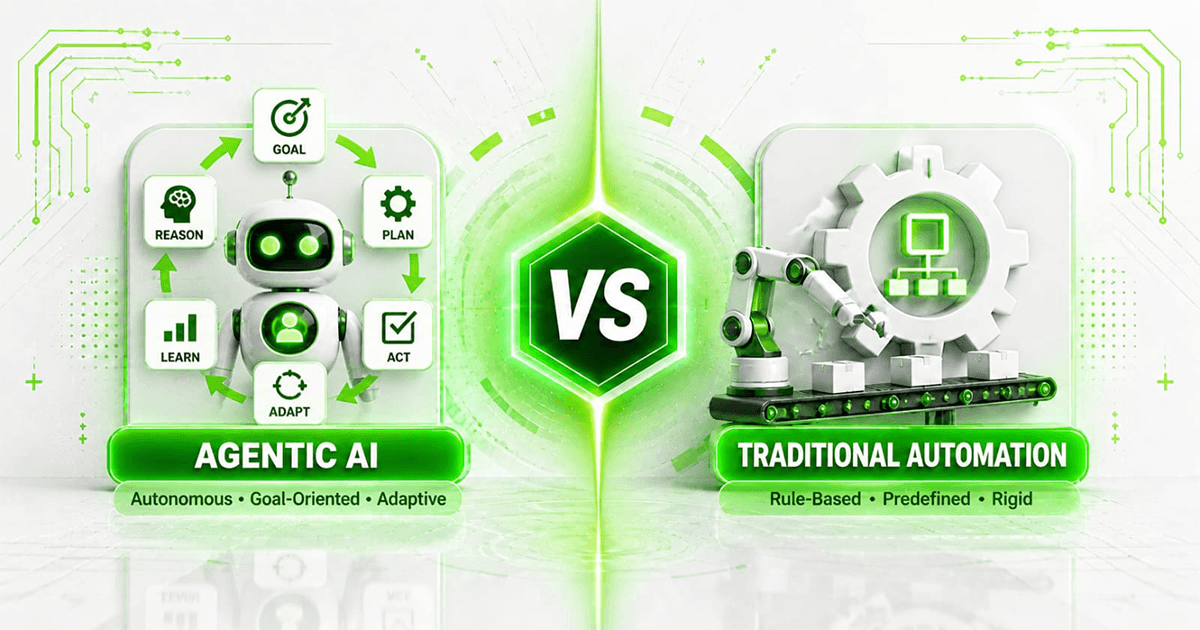
Multi Agent Systems vs Traditional Automation
Traditional automation works particularly well when:
- rules are stable;
- inputs are structured;
- decisions are deterministic;
- exceptions are limited.
Multi-agent AI becomes more interesting when:
- inputs are unstructured;
- tasks vary;
- language understanding matters;
- research is required;
- decisions require contextual reasoning;
- multiple specialised capabilities are needed.
Many strong systems combine both.
For example:
Traditional Workflow
↓
AI Agent
↓
Deterministic Validation
↓
Another AI Agent
↓
Human Approval
↓
Traditional API Integration
The future of automation is unlikely to be “AI replaces all software.”
It is more likely to be AI integrated into software where intelligence is useful.
Multi Agent Systems vs One Powerful Model
This is another important comparison.
Modern models are increasingly capable.
A single powerful model can sometimes handle tasks that previously seemed to require several specialised agents.
Before building five agents, test whether:
one agent + good tools + structured workflow
can solve the problem.
If it can, the simpler architecture may offer:
- lower cost;
- lower latency;
- easier debugging;
- simpler security;
- better observability.
Complexity should be earned.
How Much Does a Multi Agent System Cost?
There is no universal price.
Cost depends on:
- number of agents;
- model selection;
- token consumption;
- workflow volume;
- tool usage;
- infrastructure;
- integrations;
- data architecture;
- security requirements;
- monitoring;
- development complexity.
Operating cost can also vary dramatically.
A system using several expensive models for every transaction may cost significantly more than a carefully routed architecture.
This is why AI architecture should consider economics from the beginning.
How to Reduce Multi Agent AI Costs
Several strategies can help.
Use Smaller Models Where Appropriate
Classification may not require your most powerful reasoning model.
Cache Repeated Information
Do not repeatedly research information that has not changed.
Use Deterministic Software
Do not ask an LLM to calculate something ordinary code can calculate exactly.
Limit Agent Conversations
Uncontrolled agent debate can become expensive.
Route Tasks Intelligently
Use expensive models only when complexity requires them.
Stop Early
If the objective is already achieved, terminate the workflow.
Measure Cost Per Outcome
Do not optimise only token cost.
Measure:
Cost per successfully completed business task.
How to Evaluate Multi Agent Performance
Track more than whether the final answer “looks good.”
Useful metrics include:
- successful completion rate;
- average execution time;
- cost per completed task;
- number of model calls;
- tool-call failure rate;
- human intervention rate;
- agent handoff failures;
- hallucination rate;
- retry rate;
- workflow abandonment;
- business outcome.
If adding another agent increases cost by 40% but improves successful completion by only 1%, it may not be worth it.
Are Multi Agent Systems the Future?
They will likely play an important role in some categories of AI systems.
But that does not mean every application will become a society of autonomous agents.
The strongest production systems will probably use a mixture of:
AI agents
traditional software
deterministic rules
databases
APIs
human judgement
The objective is not to maximise AI.
The objective is to build the best system.
Building Multi Agent Systems With Mintodes
Multi-agent systems become valuable when a business workflow genuinely requires several specialised reasoning capabilities.
Mintodes builds custom AI agents and AI automation systems that can combine:
- specialised agents;
- supervisor agents;
- workflow orchestration;
- tool calling;
- retrieval systems;
- structured outputs;
- human approval;
- APIs;
- CRM integrations;
- document processing;
- monitoring;
- error handling.
The architecture should depend on the workflow.
Sometimes the correct solution is a multi-agent system.
Sometimes it is one agent.
Sometimes it is ordinary automation with a small amount of AI.
The engineering decision matters more than the label.
Businesses evaluating possible implementations can explore Mintodes case studies or review our broader AI automation services.
Frequently Asked Questions
What is a multi agent system?
A multi agent system contains multiple agents that interact or coordinate to accomplish individual or shared objectives.
What is a multi agent AI system?
A multi agent AI system uses multiple AI-powered agents, often with different roles, tools or context, to complete a larger workflow.
What is a supervisor agent?
A supervisor agent coordinates other agents by assigning tasks, collecting results and deciding what should happen next.
Are multi agent systems better than single AI agents?
Not automatically. They are useful when specialisation, parallelism, permission separation or complex coordination creates meaningful value.
What are the disadvantages of multi agent systems?
Potential disadvantages include higher cost, increased latency, debugging difficulty, security complexity, communication failures and error propagation.
Can AI agents communicate with each other?
Yes. Agents can exchange structured state, messages, events or information through a central orchestration layer.
Can multiple AI agents work simultaneously?
Yes. Independent subtasks can sometimes run in parallel, reducing overall execution time.
Are multi agent systems expensive?
They can be. More agents often mean additional model calls, tokens, infrastructure and engineering complexity.
Are multi agent systems secure?
They can be designed securely, but multiple agents, tools and integrations increase the attack surface and make permission management more important.
Do businesses need multi agent systems?
Many do not. A single agent or conventional automation may be simpler and more economical for straightforward workflows.
What businesses can use multi agent AI?
Potential applications exist across sales, customer service, finance, insurance, logistics, document processing, software development, research and operations.
Should every task become autonomous?
No. High-impact decisions may still require deterministic validation or human approval.
Final Thoughts
Multi-agent AI sounds futuristic.
But the core idea is straightforward:
Instead of asking one AI to do everything, divide complex work between specialised agents.
That can be extremely powerful.
A research agent can research.
A qualification agent can evaluate.
A document agent can process information.
A supervisor can coordinate.
An execution agent can interact with software.
But every additional agent introduces another layer of:
cost
latency
permissions
communication
failure
and
complexity.
The goal is therefore not to build the largest collection of AI agents.
The goal is to build the smallest architecture capable of reliably solving the business problem.
Sometimes that means ten agents.
Sometimes it means three.
And very often, it means one well-designed agent connected to the right tools and surrounded by reliable software.
That is the difference between building an impressive AI demo and building an AI system that can survive production.