AI can automate emails.
AI can process documents.
AI can qualify leads.
AI can answer customer questions.
AI agents can interact with CRMs, accounting systems, databases and internal tools.
But none of those capabilities answer the question that matters to a business owner:
Is the AI actually making or saving us money?
A workflow can look impressive in a demonstration and still be a poor investment.
Likewise, an AI system that appears relatively simple might quietly eliminate hundreds of hours of repetitive work every month and produce an excellent return.
That is why businesses should measure AI automation ROI, not AI novelty.
Instead of asking:
“How much can we automate?”
ask:
“What measurable economic outcome will this automation create?”
This guide explains how to calculate that outcome properly.
What Is AI Automation ROI?
AI automation ROI measures the financial return generated by an AI or automation system compared with the total amount invested in building, implementing and operating it.
At the simplest level:
ROI = (Financial Benefit − Total Cost) ÷ Total Cost × 100
For example, suppose an AI automation system costs:
A$30,000
and generates:
A$75,000 in measurable annual benefit.
The calculation becomes:
(75,000 − 30,000) ÷ 30,000 × 100
= 150% ROI
The business generated A$1.50 in net benefit for every A$1 invested.
But this simple formula only works when the numbers going into it are realistic.
That is where many AI ROI calculations fail.
The Biggest Mistake Businesses Make With AI ROI
A common calculation looks like this:
“AI saves our employees 500 hours.”
Then:
“500 hours × A$50/hour = A$25,000 saved.”
Therefore:
“The AI generated A$25,000.”
Not necessarily.
Time saved and money saved are not automatically the same thing.
Suppose AI saves an employee five hours per week.
If that employee still works the same hours and the freed time produces no additional value, the company may not have literally reduced payroll expenses.
The benefit may instead appear as:
- increased capacity;
- faster customer response;
- more sales activity;
- reduced overtime;
- avoided hiring;
- more work completed;
- improved service;
- fewer errors; or
- employees spending more time on higher-value tasks.
Those benefits can be extremely valuable.
But they should be measured honestly.
The Five Sources of AI Automation ROI
Most successful automation business cases generate value through one or more of five categories.
1. Labour Efficiency
This is the most obvious benefit.
Suppose an operations team spends 120 hours every month manually processing documents.
If automation reduces this to 25 hours:
120 − 25 = 95 hours saved per month
Annual time released:
95 × 12 = 1,140 hours
But instead of immediately calling those 1,140 hours a cash saving, ask:
What happens to those hours?
Perhaps they allow the organisation to:
- process more customers;
- avoid hiring another employee;
- reduce overtime;
- clear backlogs;
- improve response times; or
- reallocate staff to revenue-generating work.
The financial value should reflect the actual business outcome.
2. Error Reduction
Manual work creates mistakes.
For example:
- incorrect data entry;
- duplicate invoices;
- missing CRM fields;
- wrong customer details;
- incorrect document classification;
- missed follow-ups;
- inconsistent reports; and
- forgotten tasks.
These errors have costs.
Suppose a finance department experiences 60 processing errors each month.
If each error takes an average of 25 minutes to investigate and correct:
60 × 25 minutes = 1,500 minutes
That's:
25 hours per month
or:
300 hours annually.
If automation reduces those errors substantially, the avoided rework becomes part of the economic benefit.
Some errors are much more expensive than employee time.
A mistake might create:
- customer compensation;
- delayed payment;
- regulatory exposure;
- lost revenue;
- duplicated spending; or
- reputational damage.
These should be evaluated separately.
3. Avoided Hiring
This is one of the strongest automation ROI categories.
Imagine your company is growing.
Your operations team currently processes:
5,000 transactions per month.
Growth projections indicate:
8,000 transactions per month next year.
Without automation, that increased volume might require two additional employees.
With automation, the existing team might be able to handle the higher volume.
In that scenario, AI has helped create avoided hiring cost.
This is different from replacing existing employees.
Automation can allow a business to grow without increasing headcount at the same rate as workload.
That can dramatically improve operating leverage.
4. Revenue Improvement
AI automation does not only reduce costs.
It can increase revenue.
Consider sales.
A business receives 2,000 leads per month.
Sales representatives cannot respond immediately to all of them.
An AI system could:
- respond instantly;
- collect qualification information;
- score the opportunity;
- update the CRM;
- schedule appointments;
- notify the appropriate salesperson; and
- continue follow-up.
If faster response increases qualified meetings, the financial impact may be much larger than the labour saving.
Suppose automation produces:
15 additional qualified meetings per month
and the business closes:
20%
of qualified meetings.
That produces:
3 additional customers per month.
If the average gross profit per new customer is:
A$3,000
then:
3 × A$3,000 = A$9,000
in additional monthly gross profit.
Annualised:
A$108,000
That revenue contribution may dominate the ROI calculation.
5. Risk Reduction
Risk reduction is harder to quantify but should not be ignored.
Automation may reduce:
- missed compliance checks;
- incorrect records;
- unauthorised actions;
- lost documents;
- duplicate transactions;
- processing inconsistencies; and
- operational failures.
For example, an automated workflow might ensure every transaction goes through the same validation process.
That consistency has economic value.
However, avoid inventing hypothetical million-dollar savings simply to make the ROI calculation look impressive.
Only include risk reduction when you can establish a reasonable financial basis.
The Real Cost of AI Automation
Businesses frequently underestimate the denominator in the ROI equation.
The true cost is not simply:
“How much did the developer charge?”
A realistic calculation can include several categories.
Initial Development Cost
This can include:
- discovery;
- workflow mapping;
- solution architecture;
- development;
- AI integration;
- API integration;
- interface development;
- testing;
- deployment; and
- documentation.
Software and Infrastructure
Depending on the system, ongoing costs might include:
- cloud hosting;
- LLM usage;
- vector databases;
- automation platforms;
- monitoring tools;
- API services;
- storage;
- email/SMS services; and
- third-party SaaS subscriptions.
Internal Employee Time
Your employees may need to participate in:
- requirements gathering;
- testing;
- training;
- process redesign;
- approvals; and
- implementation.
Their time has a cost.
Maintenance
AI automation is not necessarily “build once and forget forever.”
Systems may need:
- prompt updates;
- API maintenance;
- workflow changes;
- model updates;
- bug fixes;
- monitoring;
- security updates; and
- performance optimisation.
Training and Change Management
Employees need to understand:
- what the system does;
- what it does not do;
- when human intervention is required;
- how exceptions are handled; and
- how failures are reported.
Ignoring these costs makes ROI look better on paper than it is in reality.
The Complete AI Automation ROI Formula
A more useful calculation is:
Annual AI Benefit = Labour Efficiency Value + Avoided Hiring + Error Reduction + Additional Gross Profit + Quantifiable Risk Reduction
Then calculate:
Annual Net Benefit = Annual AI Benefit − Annual Operating Cost
And:
ROI = (Annual AI Benefit − Total Annualised Cost) ÷ Total Annualised Cost × 100
You should also calculate payback period.
AI Automation Payback Period
Payback period tells you how long it takes for the investment to recover its initial cost.
Basic formula:
Payback Period = Initial Investment ÷ Monthly Net Benefit
Suppose:
Initial implementation:
A$36,000
Monthly measurable benefit:
A$8,500
Monthly operating cost:
A$1,500
Monthly net benefit:
A$7,000
Payback period:
36,000 ÷ 7,000 = 5.14 months
The initial investment would therefore be recovered in a little over five months, assuming the projected benefits actually materialise.
A Practical Australian Business Example
Imagine an Australian business has a five-person administration team.
One workflow involves manually:
- downloading incoming documents;
- extracting information;
- entering data into a CRM;
- checking records;
- routing documents;
- sending confirmation emails; and
- updating spreadsheets.
The workflow processes:
3,000 documents per month.
Average manual processing time:
6 minutes per document.
Monthly workload:
3,000 × 6 minutes = 18,000 minutes
or:
300 hours per month.
Suppose the loaded labour cost averages:
A$45 per hour.
The theoretical labour value is:
300 × A$45 = A$13,500 per month.
Now suppose an AI document-processing workflow automates most routine cases while humans handle exceptions.
Human workload falls from:
300 hours
to:
75 hours per month.
Time released:
225 hours per month.
Theoretical labour capacity value:
225 × A$45 = A$10,125 per month.
But we should not automatically claim A$10,125 cash savings.
Instead, assume the business determines that the additional capacity allows it to avoid hiring another operations employee worth:
A$70,000 annually
in loaded employment cost.
The system also reduces rework by:
A$12,000 annually.
And faster processing creates:
A$18,000
in estimated additional annual gross profit.
Total measurable annual benefit:
A$70,000
- A$12,000
- A$18,000
= A$100,000
Now assume:
Initial implementation:
A$32,000
Annual infrastructure and maintenance:
A$12,000
First-year total cost:
A$44,000
First-year ROI:
(A$100,000 − A$44,000) ÷ A$44,000 × 100
= approximately 127%
This is much more credible than simply multiplying every saved minute by an employee's salary.
AI ROI Before Automation vs After Automation
The best ROI measurement starts before implementation.
You need a baseline.
Measure the existing process first.
For example:
| Metric | Before AI | After AI |
|---|---|---|
| Monthly transactions | 3,000 | 3,000 |
| Human processing hours | 300 | 75 |
| Average processing time | 6 min | 1.5 min human involvement |
| Monthly errors | 85 | 18 |
| Average response time | 9 hours | 35 minutes |
| Monthly overtime | A$4,000 | A$700 |
| Additional hires required | 1 | 0 |
Without baseline data, businesses often end up saying:
“The AI feels faster.”
That is not ROI measurement.
What Metrics Should You Track?
Different automations require different metrics.
Customer Service AI
Track:
- response time;
- resolution time;
- containment rate;
- escalation rate;
- cost per conversation;
- customer satisfaction;
- support backlog;
- human handling time.
Sales AI
Track:
- lead response time;
- qualified lead rate;
- meeting-booking rate;
- conversion rate;
- follow-up completion;
- sales cycle length;
- pipeline value;
- gross profit from AI-assisted opportunities.
Document Processing AI
Track:
- documents processed;
- processing time;
- extraction accuracy;
- exception rate;
- human review time;
- rework;
- cost per document.
Finance Automation
Track:
- invoice processing time;
- cost per invoice;
- duplicate detection;
- reconciliation time;
- exception rate;
- payment delays;
- manual touches.
AI Agents
Track:
- tasks completed;
- successful autonomous completion rate;
- human intervention rate;
- tool-call failures;
- average task cost;
- task duration;
- error rate;
- business outcome per completed task.
Technical metrics matter.
But the final question should remain:
Did the business outcome improve?
Cost Per AI Task
Another useful metric is:
Cost Per Completed Task
Suppose an AI agent costs:
A$2,400 per month
across model usage, infrastructure and maintenance.
It successfully completes:
4,000 business tasks per month.
Cost per completed task:
A$2,400 ÷ 4,000 = A$0.60
Now compare that with the existing process.
If manual processing costs:
A$6.50 per task
the difference becomes meaningful.
But remember to compare equivalent outcomes.
If the AI completes tasks poorly and humans spend significant time fixing them, the real cost is higher.
Automation Rate Is Not the Same as ROI
This deserves emphasis.
Suppose Company A automates:
90% of a workflow
but saves:
A$20,000 annually.
Company B automates:
35% of another workflow
but generates:
A$300,000 annually.
Which project is better?
From an economic perspective, probably Company B.
The objective should not be:
“Automate the highest percentage possible.”
It should be:
Automate where the economic value is highest.
Which Processes Usually Have Strong AI Automation ROI?
Look for processes with several of these characteristics.
High Volume
The task occurs hundreds or thousands of times.
Repetitive
Employees repeatedly perform similar steps.
Expensive Manual Labour
Significant employee time is consumed.
Structured Outcomes
The desired result can be clearly defined.
Digital Inputs
Information already arrives through emails, forms, PDFs, databases or APIs.
Costly Errors
Mistakes create rework or financial impact.
Slow Response
Speed influences customer experience or revenue.
Scaling Pressure
Workload is increasing faster than headcount.
Multiple Systems
Employees spend time copying information between software.
The more of these characteristics a workflow has, the more attractive it may be for automation.
Where AI Automation Often Has Poor ROI
Not every process should be automated.
Be careful with tasks that are:
- extremely rare;
- constantly changing;
- poorly understood;
- inexpensive to perform manually;
- highly subjective;
- impossible to evaluate;
- dependent on inaccessible systems; or
- so high-risk that human review remains almost identical to the original workload.
Imagine a task takes:
10 minutes
and occurs:
twice per month.
Building a A$20,000 AI system for it probably makes little sense.
A boring automation saving 1,000 hours annually may be far more valuable.
The AI Automation ROI Scorecard
Before building anything, score the workflow from 1 to 5.
Frequency
How often does it occur?
Time Consumption
How much employee time does it require?
Labour Cost
How expensive is the current process?
Error Cost
How expensive are mistakes?
Revenue Impact
Can improvement generate revenue?
Scalability
Will workload increase?
Standardisation
Can the process be clearly defined?
Data Availability
Can the necessary data be accessed?
Integration Feasibility
Can the required systems connect?
Risk
What happens if the automation is wrong?
A workflow scoring highly on value and feasibility can move toward the front of the automation roadmap.
Three ROI Scenarios Every Business Should Calculate
Never build the business case using only the best possible outcome.
Create three models.
Conservative Case
Assume:
- lower automation rate;
- higher operating costs;
- slower adoption;
- more human intervention;
- limited revenue improvement.
Expected Case
Use the most realistic assumptions.
Optimistic Case
Model strong adoption and performance.
If the project still produces acceptable ROI under the conservative scenario, the investment becomes much more compelling.
Example
Suppose implementation costs:
A$40,000
Annual operating cost:
A$15,000
Conservative Benefit
A$65,000
Net benefit:
A$10,000
First-year ROI:
18.2%
Expected Benefit
A$110,000
Net benefit:
A$55,000
First-year ROI:
100%
Optimistic Benefit
A$170,000
Net benefit:
A$115,000
First-year ROI:
209%
Now management can make a decision based on a range instead of a sales pitch.
AI Agent ROI Can Be Different From Traditional Automation ROI
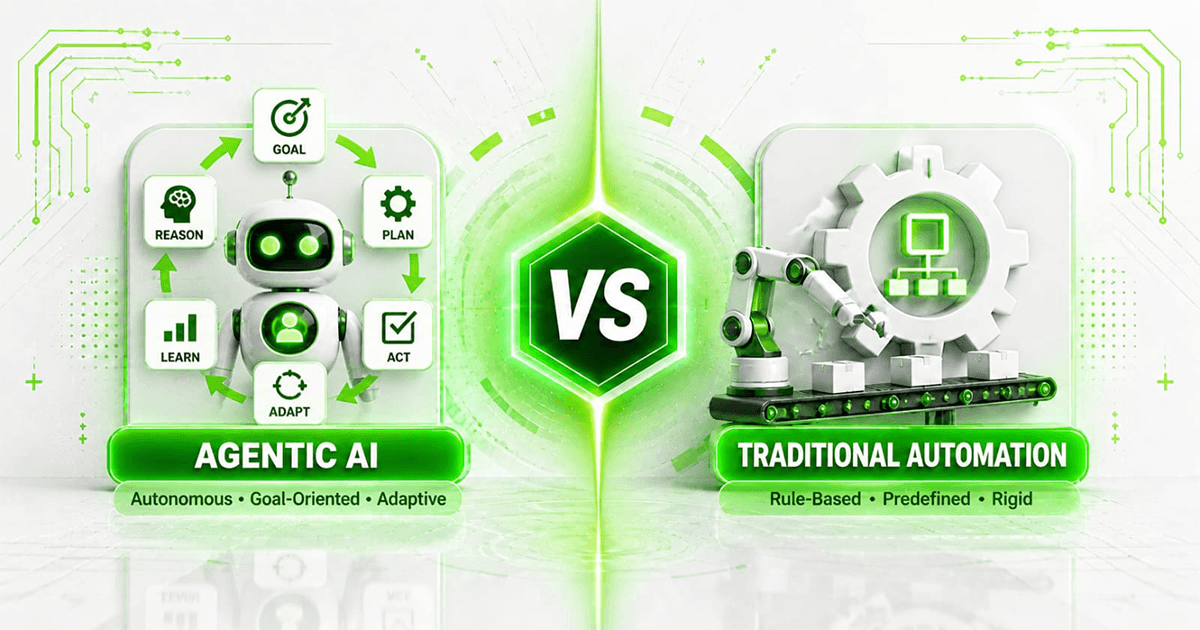
Traditional automation often follows predetermined logic.
AI agents can handle more variable workflows.
That means an agent might create value by completing tasks that previously required human judgement.
But AI agents also introduce additional costs:
- model usage;
- monitoring;
- evaluation;
- exception handling;
- security controls;
- human approval;
- unpredictable execution paths.
Therefore, an AI agent should not automatically replace conventional automation.
Sometimes:
Rule-based automation is enough.
Sometimes:
AI + automation is better.
Sometimes:
An AI agent is justified.
The architecture should match the problem.
Businesses exploring autonomous workflows can review Mintodes AI Agent Development to understand where agents fit compared with conventional workflow automation.
ROI of Document Automation
Document-heavy businesses are particularly interesting because employees often spend significant time:
- opening PDFs;
- reading forms;
- extracting fields;
- renaming files;
- entering data;
- checking documents;
- routing information.
AI can potentially convert:
Document → Classification → Extraction → Validation → Business Rules → Human Review if Needed → Destination System
Businesses evaluating this type of workflow can explore document processing automation.
ROI of CRM and Sales Automation
CRM automation can generate ROI differently.
The value may come from:
- faster lead response;
- fewer forgotten follow-ups;
- automatic data entry;
- better lead routing;
- improved pipeline hygiene;
- automatic enrichment;
- meeting scheduling;
- sales-rep capacity.
For example, saving each salesperson 45 minutes per day can create meaningful capacity across a large sales team.
But the stronger business case may come from increasing conversions rather than simply saving administrative time.
Explore CRM and sales automation for examples of how connected sales workflows can be structured.
How Long Should AI Automation Take to Pay Back?
There is no universal answer.
A small workflow might pay back quickly.
A complex enterprise AI system may require a much longer horizon.
Rather than believing arbitrary claims such as:
“Every AI project should pay for itself in three months.”
calculate:
Initial Cost → Monthly Operating Cost → Monthly Measurable Benefit → Monthly Net Benefit → Payback Period
A project should be judged against the organisation's own investment criteria, alternatives and risk tolerance.
What If AI Saves Time but Not Money?
This is common.
Suppose automation saves:
200 employee hours per month.
But:
- nobody is laid off;
- hiring plans do not change;
- overtime does not decrease.
Does that mean the project failed?
Not necessarily.
Ask what employees do with the released capacity.
If they use it to:
- serve more customers;
- sell more;
- reduce backlog;
- improve quality;
- launch projects faster;
- shorten response times;
then the value can still be substantial.
But you should measure those outcomes.
Otherwise “time saved” becomes a vanity metric.
The 90-Day AI ROI Measurement Framework
Businesses do not need to wait a year to determine whether automation is working.
Days 1 to 30
Establish baseline metrics.
Measure:
- volume;
- processing time;
- labour;
- errors;
- response time;
- cost;
- revenue outcome.
Days 31 to 60
Deploy automation carefully.
Track:
- automation rate;
- exception rate;
- human intervention;
- system errors;
- usage cost;
- output quality.
Days 61 to 90
Compare business outcomes.
Calculate:
- time released;
- costs avoided;
- errors reduced;
- revenue improvement;
- operating cost;
- net benefit.
Then decide whether to:
expand
optimise
maintain
or
stop
the automation.
Stopping a poor automation project can also be a good business decision.
AI Automation ROI Checklist
Before approving an AI project, answer:
- What process are we improving?
- How much does the current process cost?
- How many times does it occur?
- How many employee hours does it consume?
- What do mistakes cost?
- Does slow execution reduce revenue?
- Will workload increase?
- What percentage can realistically be automated?
- What still requires humans?
- What will implementation cost?
- What will ongoing operation cost?
- What integrations are required?
- What happens to the time saved?
- Can automation avoid future hiring?
- Can it increase revenue?
- How will success be measured?
- What is the expected payback period?
- What is the conservative ROI?
If several answers are unknown, do more discovery before building.
Building ROI-Focused AI Automation With Mintodes
The best automation project does not begin with:
“Where can we put AI?”
It begins with:
“Where is the business losing time, money or capacity?”
Then determine whether AI is the right tool.
Mintodes designs AI automation systems around measurable business workflows including:
- AI agents;
- workflow automation;
- document processing;
- CRM and sales automation;
- finance workflows;
- customer support;
- system integrations; and
- custom AI applications.
The objective should not be automation for its own sake.
It should be an improvement you can measure.
Businesses considering autonomous workflows can also review AI Agent Development, while existing implementation examples are available in the Mintodes case studies.
Frequently Asked Questions
What is AI automation ROI?
AI automation ROI measures the financial return generated by an AI automation investment relative to its implementation and operating costs.
How do you calculate AI ROI?
A basic formula is:
ROI = (Total Financial Benefit − Total Cost) ÷ Total Cost × 100
Businesses should include realistic implementation, infrastructure, maintenance and internal costs.
Is employee time saved equal to money saved?
Not automatically. Time savings become financially meaningful when they reduce labour costs, avoid hiring, increase capacity, generate revenue or create another measurable business benefit.
What is a good ROI for AI automation?
There is no universal percentage. A good return depends on implementation risk, alternative investments, payback period, strategic importance and the organisation's financial requirements.
How do you calculate automation payback period?
Divide the initial investment by the monthly net financial benefit generated after ongoing costs.
Can AI automation increase revenue?
Yes. Examples include faster lead response, better follow-up, higher operational capacity, improved customer experience and reduced sales administration.
What costs should be included in an AI ROI calculation?
Include development, implementation, integrations, infrastructure, AI model usage, third-party software, maintenance, monitoring, employee involvement and change management where applicable.
Which business processes usually have strong automation ROI?
High-volume, repetitive and time-consuming processes with digital inputs, measurable outcomes, costly errors or scaling pressure are often strong candidates.
Can an AI project have negative ROI?
Yes. A system can cost more to implement and operate than the measurable value it produces. That is why baseline measurement and post-deployment evaluation matter.
Should every workflow use an AI agent?
No. Some workflows are better handled through conventional automation, deterministic software or human processes.
Final Thoughts
The question is no longer:
“Can AI automate this?”
Modern AI can automate parts of an enormous number of workflows.
The better question is:
“Should we automate this?”
And the answer should come from economics.
Measure the existing process.
Calculate its true cost.
Identify where value can be created.
Include the complete cost of automation.
Build conservative, expected and optimistic scenarios.
Then measure the result after deployment.
The most impressive AI system is not necessarily the one with the most agents, models or integrations.
It is the one that creates the greatest measurable business value relative to what it costs to operate.
That is the difference between experimenting with AI and building AI that actually contributes to the business.