A manufacturing business can have modern machinery, experienced employees and a well-organised production facility, yet still lose valuable time because of problems that are difficult to predict.
A machine stops unexpectedly. A production batch fails a quality check. Raw materials arrive late. An order needs to be completed urgently, but the production schedule is already full.
These situations are familiar to many manufacturers. Although individual problems may appear small, their combined effect can disrupt production, increase operating costs and affect customer delivery commitments.
For Australian manufacturers, improving operational efficiency is becoming increasingly important. Rising business costs, supply chain uncertainty and pressure to deliver consistent product quality make it harder to rely on manual processes alone.
Artificial intelligence is creating new opportunities to address these challenges.
Through AI automation, manufacturers can analyse operational data, identify unusual patterns, improve maintenance planning and coordinate everyday workflows more effectively.
However, the real opportunity is not simply introducing robots or replacing machinery. It is making better use of the information already available across a manufacturing business.
A Factory Floor Where Small Problems Become Expensive
Imagine an Australian manufacturing company producing metal components for commercial equipment.
The facility operates several machines across multiple production stages. Employees monitor equipment, inspect finished products and coordinate material requirements.
On a normal day, production runs according to schedule.
Then one machine begins operating differently. Its temperature gradually increases, but the change is not immediately obvious to the operator. A few hours later, the machine stops working.
Production is delayed. Employees need to wait or move to another task. The maintenance team investigates the problem, and the delivery schedule may need to be adjusted.
The issue could potentially have been identified earlier if the machine's operating data had been monitored and analysed.
This is one example of where AI-powered systems can help.
By analysing equipment information and identifying unusual behaviour, an AI-supported maintenance workflow can alert the relevant team before a developing issue becomes a larger operational disruption.
It does not guarantee that equipment failures will disappear. Instead, it gives manufacturers another way to identify risks and respond earlier.
From Reactive Maintenance to Better Equipment Planning
Equipment maintenance is one of the most practical areas where AI can support manufacturing operations.
Traditional maintenance approaches generally rely on scheduled servicing, operator observations or repairs after a machine breaks down.
Each approach has limitations.
Scheduled maintenance may involve servicing equipment that is still operating normally. Reactive maintenance can result in unexpected downtime. Manual inspections may not identify every developing issue.
AI-assisted predictive maintenance uses operational data to help identify potential equipment problems.
Depending on the available sensors and systems, this data may include:
- Machine temperature
- Vibration levels
- Operating hours
- Pressure readings
- Energy consumption
- Production speed
- Historical maintenance records
An AI system can analyse patterns in this information and identify changes that may indicate developing equipment issues.
For example, if a machine begins showing unusual vibration patterns compared with its normal operating behaviour, the system could flag the change for inspection.
The maintenance team can then investigate and decide whether servicing is required.
The benefit is improved visibility. Instead of depending entirely on fixed schedules or unexpected breakdowns, manufacturers can make maintenance decisions using additional operational evidence.
Quality Control Is Becoming More Data-Driven
Product quality is central to manufacturing.
A defective component can create additional work, waste materials and delay an entire production order. In industries where products must meet strict specifications, quality problems can also create compliance and customer concerns.
Traditional quality inspections often depend on employees checking products at different production stages.
Human inspection remains important, but repetitive visual checks can be time-consuming, particularly when production volumes are high.
AI-powered computer vision can support quality control by analysing images captured during production.
Depending on the application, these systems may help identify:
- Surface scratches
- Incorrect component placement
- Visible cracks
- Packaging defects
- Missing components
- Inconsistent product dimensions when suitable imaging and measurement systems are used
For example, a manufacturer producing packaged components could use an automated vision system to flag products with missing labels or visible packaging damage.
The flagged products can then be reviewed by quality personnel.
This creates a more consistent inspection process and may help teams identify recurring quality issues.
However, AI inspection systems need appropriate training data, testing and calibration. They should not be assumed to identify every defect, and important quality decisions may still require qualified human inspection.
Production Planning: The Challenge of Keeping Everything in Sync
Manufacturing is not just about operating machines.
A production schedule must account for materials, employee availability, machine capacity, customer deadlines and unexpected changes.
When these activities are managed through disconnected spreadsheets, emails and manual updates, even a small change can create confusion.
Consider a business receiving an urgent customer order.
The production manager needs to determine whether the factory has enough raw materials, whether the required machinery is available and whether the new order can be completed without delaying existing commitments.
AI-assisted planning tools can help analyse relevant operational information and highlight possible scheduling conflicts.
For instance, a connected system could identify:
- Orders approaching their deadlines
- Production stages experiencing delays
- Materials that may run short
- Equipment scheduled for maintenance
- Workloads that exceed available capacity
This information can help managers assess different scheduling options.
The system may recommend a revised production sequence, but managers should review the recommendation before making changes.
Manufacturing schedules involve practical considerations that software may not fully understand, including employee experience, supplier reliability and unexpected production constraints.
The Supply Chain Connection
A factory depends on more than its own production equipment.
Suppliers, transport providers, warehouses and distributors all influence whether an order can be completed on time.
When supply chain information is scattered across different systems, manufacturers may struggle to identify problems early.
AI can help analyse available supply chain data and highlight patterns that deserve attention.
For example, a manufacturer might use historical delivery information and current inventory records to identify materials that regularly arrive later than expected.
A connected workflow could then notify the purchasing team when stock levels approach a defined threshold.
Other possible applications include:
- Monitoring inventory levels
- Identifying unusual changes in material demand
- Preparing purchase order information
- Flagging delayed supplier deliveries
- Tracking stock movement between locations
- Generating inventory reports
These workflows can improve visibility and reduce the amount of manual administration required.
However, purchasing decisions should still account for supplier relationships, contractual arrangements and actual production requirements.
What Happens When Manufacturing Systems Work Together?
One of the biggest challenges for manufacturers is that useful information often exists in separate systems.
Production data may be stored in manufacturing software. Inventory information may sit in an enterprise resource planning platform. Maintenance records may be managed separately, while customer orders arrive through another system.
When these tools do not communicate effectively, employees spend time transferring information between them.
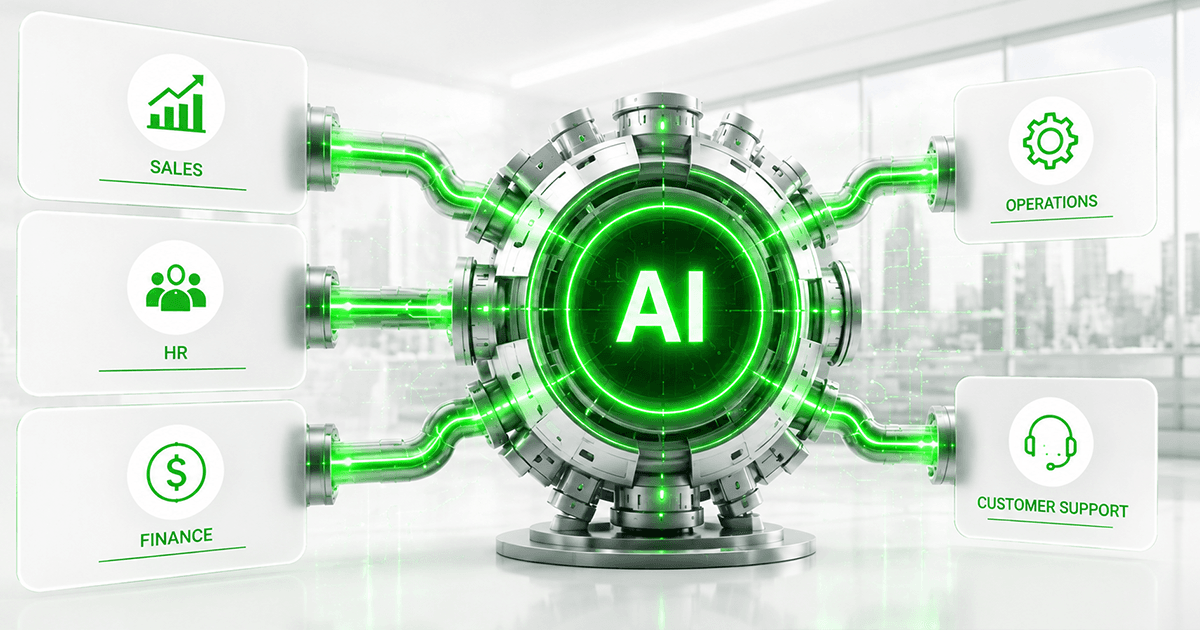
AI automation becomes more valuable when it works alongside connected business systems.
Consider a connected manufacturing workflow:
A customer order enters the business system. Relevant production information is shared with the planning team. Inventory records are checked, and potential material shortages are flagged. Production updates are recorded, while maintenance notifications are generated when equipment requires attention.
Managers can then access a clearer picture of what is happening across the operation.
The objective is not to create a complicated technology environment. It is to reduce information gaps and help employees make decisions using more reliable data.
A Practical Example: Improving a Manufacturing Operation
Consider a medium-sized Australian manufacturer producing industrial components.
The company has experienced several operational challenges:
- Unexpected equipment downtime
- Delays caused by material shortages
- Time-consuming quality inspections
- Manual production reporting
- Limited visibility across different production stages
Rather than replacing its existing machinery or business software, the company begins with a targeted automation project.
First, equipment data is collected from selected machines. An analytics system monitors operating patterns and flags unusual readings.
Next, inventory information is connected to automated notifications. Purchasing staff receive alerts when important materials approach predefined stock levels.
The company also introduces digital production reporting, reducing the need for employees to manually prepare recurring updates.
Finally, a computer vision solution is tested on a specific quality inspection task.
The business evaluates each improvement separately, checking whether it reduces delays, saves employee time or improves production visibility.
This gradual approach is often more practical than attempting to automate an entire factory in one project.
The Human Side of Manufacturing Automation
Manufacturing relies on people with practical knowledge and experience.
Machine operators understand equipment behaviour. Maintenance technicians recognise unusual mechanical conditions. Production managers know how customer requirements affect scheduling.
AI should support this experience rather than ignore it.
For example, an automated maintenance alert may identify unusual machine behaviour, but an experienced technician still needs to investigate the cause.
Similarly, an AI-generated production recommendation may highlight a scheduling opportunity, but the production manager must consider whether it is realistic.
Successful automation requires employees to understand how systems work, what information they use and when human intervention is necessary.
Businesses should also provide suitable training when introducing new technologies.
What Australian Manufacturers Should Consider Before Investing
AI automation can create operational value, but not every manufacturing business needs the same solution.
Before investing, businesses should consider several important factors.
Data quality: AI systems depend on reliable information. Incomplete machine records, inconsistent inventory data and inaccurate production reports can affect results.
System compatibility: New solutions should work with existing machinery, software and operational processes wherever possible.
Cybersecurity: Connected equipment and business systems introduce additional security considerations. Access controls, system updates and network protection should form part of implementation planning.
Employee training: Workers need to understand how automation affects their responsibilities and how to respond to system alerts.
Return on investment: Businesses should identify the operational problem they want to solve and measure whether the solution improves it.
Human oversight: AI-generated recommendations and automated actions should have appropriate review and escalation procedures, especially where safety, product quality or regulatory requirements are involved.
A clear business objective is more valuable than adopting technology simply because it is available.
How to Measure the Results of AI Automation
Manufacturers should evaluate automation using operational measurements rather than assumptions.
Useful indicators include:
| Performance indicator | What it measures |
|---|---|
| Equipment downtime | Time machinery is unavailable |
| Production cycle time | Time required to complete production |
| Defect rate | Percentage of products failing quality checks |
| Material wastage | Materials lost during production |
| Inventory accuracy | Difference between recorded and actual stock |
| Maintenance response time | Time taken to respond to equipment issues |
| On-time delivery | Orders completed by their agreed deadlines |
Businesses should establish a baseline before introducing automation.
They can then compare performance over time to determine whether the new workflow is delivering meaningful improvements.
How Mintodes Can Support Manufacturing Businesses
Manufacturing businesses often need automation that connects existing tools rather than forcing them to replace everything.
Mintodes focuses on practical AI automation solutions designed around business workflows.
For manufacturers, this could involve connecting software systems, automating recurring administrative tasks, creating AI-powered reporting workflows or developing AI agents that help employees access and organise business information.
The right approach depends on the company's equipment, software, operational requirements and available data.
You can explore Mintodes AI automation services and AI agent solutions to learn more about the types of automation solutions available.
Frequently Asked Questions
How is AI used in Australian manufacturing?
AI can support predictive maintenance, production planning, quality inspections, inventory management and operational reporting. The specific applications depend on the manufacturer's equipment, software and available data.
Can AI reduce manufacturing downtime?
AI-assisted predictive maintenance can help identify unusual equipment behaviour and potential problems earlier. This may help maintenance teams plan inspections and servicing, although it cannot eliminate unexpected failures.
Is AI automation suitable for small manufacturing businesses?
Yes. Smaller manufacturers can begin with targeted projects such as automated reporting, inventory alerts or digital workflow management rather than investing in a complete smart factory.
Does AI replace manufacturing employees?
AI can automate certain repetitive activities and support operational decisions, but manufacturing still requires people to operate equipment, maintain machinery, inspect products and manage production.
What is predictive maintenance in manufacturing?
Predictive maintenance uses equipment information and analytical methods to identify signs of potential machine problems. It helps maintenance teams make more informed decisions about when equipment should be inspected or serviced.
Final Thoughts
The future of Australian manufacturing is not simply about having more advanced machines. It is also about making production operations more connected, informed and efficient.
AI automation gives manufacturers new ways to monitor equipment, improve quality control, manage inventory and organise production activities.
The most effective approach is to begin with a clear operational challenge, choose a suitable solution and measure its impact before expanding further.
When technology supports the knowledge and experience of manufacturing teams, businesses can build more reliable workflows and make better use of their resources.