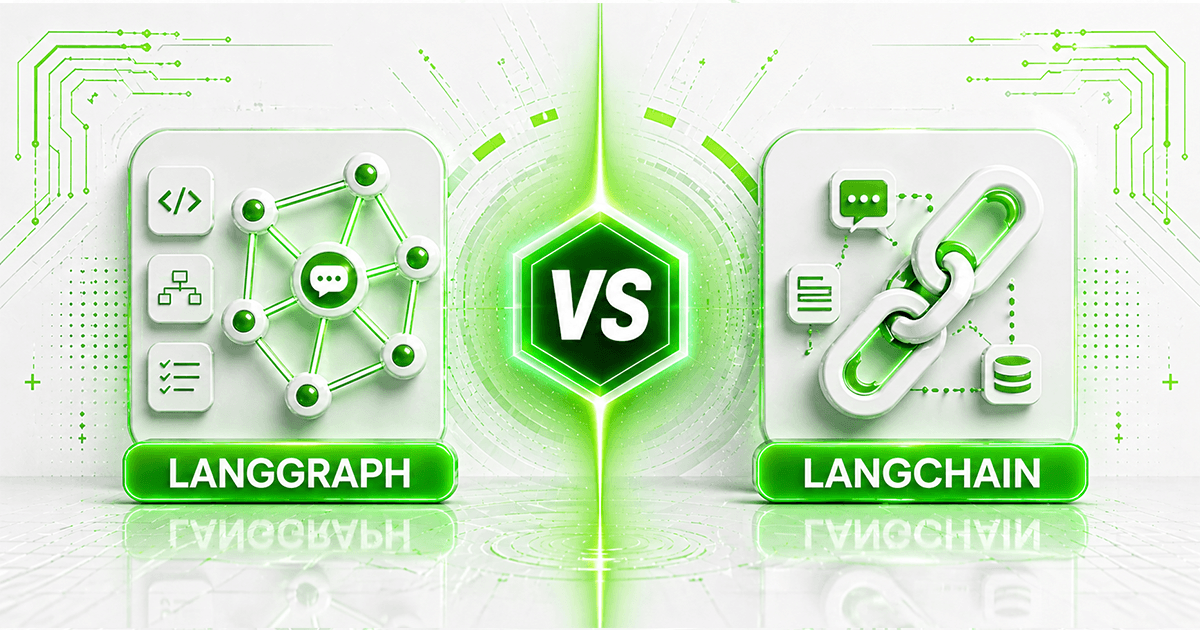
The LangChain vs LangGraph debate in the AI engineering community usually misses the point. It's not about which framework is better — it's about which one matches your specific control flow requirements.
When LangChain Is Fine
For linear chains — take input, call LLM, maybe call a tool, return output — LangChain's abstractions are clean and productive. If your AI feature is essentially a fancy API wrapper with some prompt engineering, LangChain gets you there faster.
When You Need LangGraph
The moment your agent needs to make decisions about what to do next, loop back, handle parallel branches, or maintain complex state across steps — LangGraph's graph-based execution model is dramatically cleaner than trying to hack conditional logic into LangChain's sequential chain model.
When to Skip Both
For simple integrations where you're calling one LLM with a well-defined prompt and parsing structured output, both frameworks add unnecessary abstraction. Direct API calls with a thin wrapper give you more control and fewer dependencies.