Database selection for AI applications is different from traditional CRUD apps. You're storing embeddings, managing conversation history, handling structured and unstructured data simultaneously, and often need real-time subscriptions. Here's how we think about it.
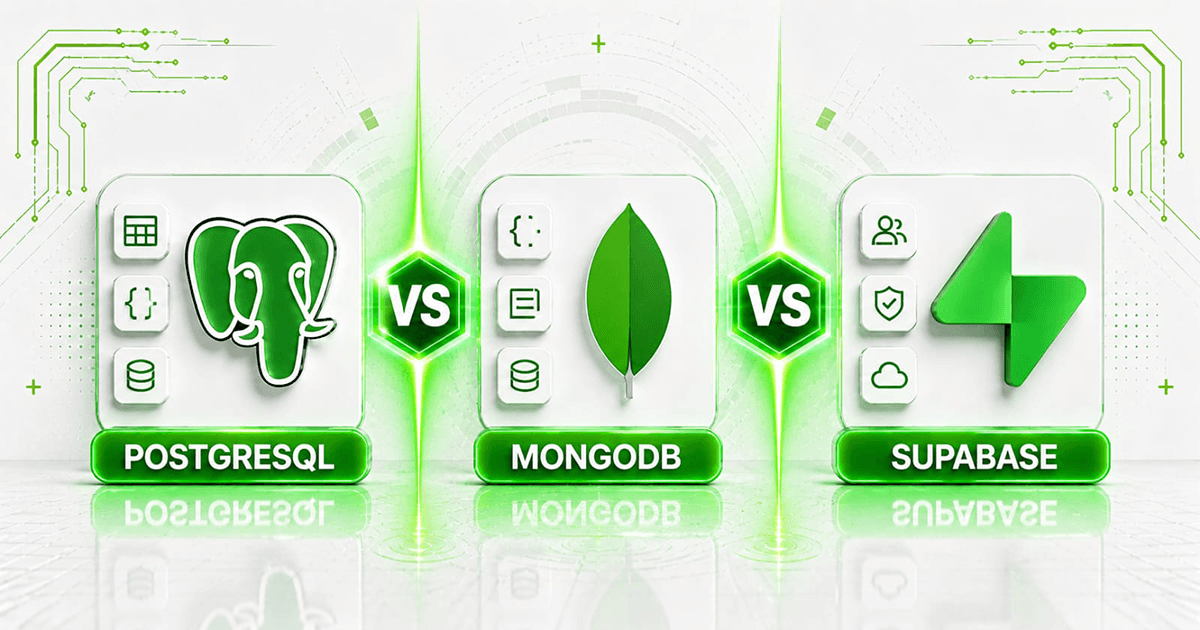
| Database | Best Fit | AI / Vector Use | Main Trade-off |
|---|---|---|---|
| PostgreSQL + pgvector | AI SaaS where relational data and data integrity matter | Vector similarity search alongside relational application data | Requires assembling and managing the surrounding application services |
| MongoDB | Applications where document structure changes frequently | Useful when flexible document storage is the primary requirement | Trades some relational consistency and structure for schema flexibility |
| Supabase | MVPs and products where speed to market is the priority | Postgres and pgvector with managed auth, storage, and real-time features | More platform-managed convenience than a standalone database setup |
PostgreSQL + pgvector: The Default Choice
For most AI SaaS products, PostgreSQL with pgvector is the right starting point. You get relational data integrity, vector similarity search, and the entire Postgres ecosystem. We use this stack for products where data relationships matter — like Takaful Bazaar's insurance pricing engine.
MongoDB: When Schema Flexibility Matters
For applications where the data shape evolves rapidly — like Vantage360's candidate profiles that vary by industry — MongoDB's flexible documents reduce migration overhead. The tradeoff is weaker consistency guarantees and no native vector search.
Supabase: When Speed to Market Wins
For MVPs where we need auth, real-time subscriptions, file storage, and pgvector all in one managed service, Supabase dramatically reduces setup time. We've used it for 3 production launches and the developer experience is genuinely excellent.